
Release & story order
Armored Core timeline
FromSoftware's Armored Core mech series from the 1997 PlayStation debut through Armored Core VI: Fires of Rubicon (2023)—US release dates, separate timeline generations that reset fiction every few entries, and links to the FromSoftware Souls hub.
Pick your path:
Release order
When FromSoftware and publishers shipped each mainline Armored Core chapter in the US—1997 PS1 through Fires of Rubicon (2023). Spin-offs Nine Breaker and Formula Front are optional.
- Newcomers 2026 → Armored Core VI only—standalone
- Retro fan → pick one generation (AC3 trilogy or AC4/For Answer) then stop
- Nine Breaker / Formula Front → optional arcade spin-offs—FAQ
- Soulsborne ARPGs live on the FromSoftware timeline—different IP
Story order tips
Armored Core uses reset timelines—AC1–2, AC3 era, AC4–V, and AC6 each tell separate worlds. Story tab groups by generation; you can start at any main numbered entry.
- Generation 1 → AC1 → Project Phantasma → Master of Arena
- Generation 2 → AC2 → Another Age
- Generation 3 → AC3 → Silent Line → Nexus → Last Raven
- Generation 4 → AC4 → For Answer → ACV → Verdict Day (AC5–V loosely linked)
- Generation 5 → AC6 Rubicon—standalone
Story order
Armored Core uses reset timelines—AC1–2, AC3 era, AC4–V, and AC6 each tell separate worlds. Story tab groups by generation; you can start at any main numbered entry.
- Generation 1 → AC1 → Project Phantasma → Master of Arena
- Generation 2 → AC2 → Another Age
- Generation 3 → AC3 → Silent Line → Nexus → Last Raven
- Generation 4 → AC4 → For Answer → ACV → Verdict Day (AC5–V loosely linked)
- Generation 5 → AC6 Rubicon—standalone
Timeline
When each game was released. Click a game for platforms, dates, and where it fits in your playthrough.
Release order
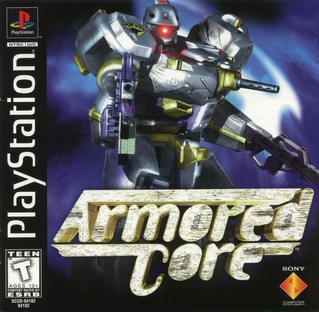
Armored Core
PS1MechMainlineTimeline IArmored Core (1997) opens Timeline I on PlayStation—corporate Ravens, arena contracts, and modular mech parts that defined FromSoftware's pre-Souls identity.
- Overview
- Weight balancing, generator output, and part compatibility math created the AC garage meta—every mission payout feeds the next build. Corporate employer structure (Chrome, Murakumo, etc.) sets mercenary tone for the whole franchise.
- In-game setting
- Timeline I opener; fiction resets completely before Armored Core 2—no carry-over story. Armored Core (1997) opens Timeline I on PlayStation—corporate Ravens, arena contracts, and modular mech parts that defined FromSoftware's pre-Souls identity.
- Should you play it?
- Retro archaeology only unless you collect PS1 classics. Not required before AC6. Pair with Project Phantasma and Master of Arena expansions in Timeline I—FAQ lists them; not separate Release rows here.
- Release date
- Japan June 1997; US PS1 launch followed same year. No official modern port—PS1 emulation or used discs.
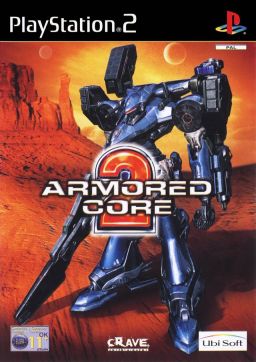
Armored Core 2
PS2MechMainlineTimeline IIArmored Core 2 (2000) begins Timeline II on PS2—new planet, new corporations, same Raven mercenary loop with early 3D arena scale.
- Overview
- PS2-era draw distance and AI partners expand mission complexity over PS1 titles. Another Age expansion continues Timeline II with new parts and employers.
- In-game setting
- No narrative link to AC1 characters—treat as anthology reset. Armored Core 2 (2000) begins Timeline II on PS2—new planet, new corporations, same Raven mercenary loop with early 3D arena scale.
- Should you play it?
- Optional retro path after AC6 if you want historical context. Stop after Timeline II unless you commit to PS2-era AC3 saga.
- Release date
- US February 29, 2000 on PS2. Another Age is same-generation expansion.
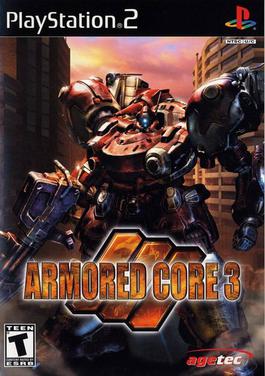
Armored Core 3
PS2MechMainlineTimeline IIIArmored Core 3 (2002) starts Timeline III—humanity underground, the Controller AI, and the surface reclamation arc fans call the best classic generation.
- Overview
- Overground return after nuclear exile; corporate wars escalate as you learn the Controller's role. Leads into Silent Line, Nexus, and Last Raven with save carry between some entries for parts transfer.
- In-game setting
- Continues through Last Raven—play in order within Timeline III before jumping to AC4. Armored Core 3 (2002) starts Timeline III—humanity underground, the Controller AI, and the surface reclamation arc fans call the best classic generation.
- Should you play it?
- Best retro pick after AC6 if you want one classic generation—buy Nexus/Last Raven bundle guides on forums. Emulation-friendly on PS2 hardware or PCSX2.
- Release date
- US April 4, 2002 on PS2. Japanese release preceded US by months.
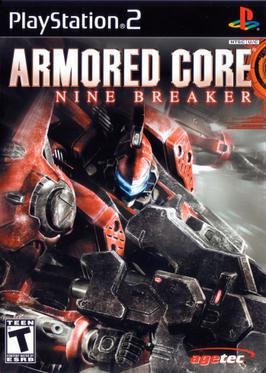 Optional
Armored Core: Nine Breaker
PS2MechOptionalSpin-offNine Breaker (2004) is an arena boss-rush spin-off in the AC3 era—accepts Nexus saves for parts but adds no required plot.
- Overview
- Arcade-style consecutive AC duels test tuned builds without mission narrative. Nine Breaker (2004) is an arena boss-rush spin-off in the AC3 era—accepts Nexus saves for parts but adds no required plot.
- In-game setting
- Non-canon per community guides—parts transfer only reason to play. Nine Breaker (2004) is an arena boss-rush spin-off in the AC3 era—accepts Nexus saves for parts but adds no required plot.
- Should you play it?
- Optional—Hide optional filter. For Timeline III completionists who want every PS2 disc. Follow Start Here if you want the shortest 2026 checklist that still includes this chapter.
- Release date
- US September 2004 on PS2. Confirm the Armored Core: Nine Breaker SKU for your region before buying.
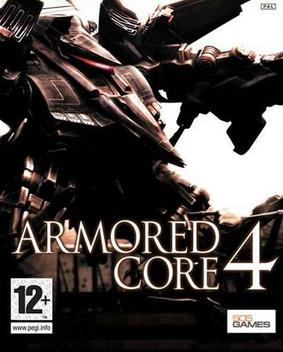
Armored Core 4
PS3Xbox 360MechMainlineTimeline IVArmored Core 4 (2006) reboots into Timeline IV—NEXT mechs, Lynx pilots, colony oppression, and faster arena combat on PS3/Xbox 360.
- Overview
- Kojima particles and NEXT frame mobility replace slower AC3 movement—missions become more aggressive and aerial. Story is dystopian corporate war on a fresh world.
- In-game setting
- Direct setup for For Answer—same Lynx protagonist continuity. Armored Core 4 (2006) reboots into Timeline IV—NEXT mechs, Lynx pilots, colony oppression, and faster arena combat on PS3/Xbox 360.
- Should you play it?
- Optional before AC6. If you want one classic duo, many pick AC4 + For Answer (see next row). Xbox 360/PS3 backward compatibility varies—check your console.
- Release date
- US March 20, 2006 on PS3 and Xbox 360. Online lobbies largely inactive in 2026—solo campaign still viable.
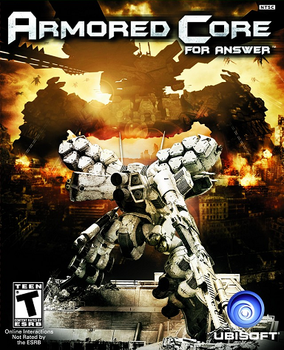
Armored Core: For Answer
PS3Xbox 360MechMainlineTimeline IVFor Answer (2008) continues AC4's NEXT war—airborne colonies, environmental collapse, and some of the series' bleakest endings plus the White Glint legacy boss.
- Overview
- Expanded NEXT customization and multi-route endings where player allegiance decides colony survival. White Glint appears as iconic optional encounter tying fans back to AC4 protagonist myth.
- In-game setting
- Darkest endings in franchise history—completionists hunt all faction routes. For Answer (2008) continues AC4's NEXT war—airborne colonies, environmental collapse, and some of the series' bleakest endings plus the White Glint legacy boss.
- Should you play it?
- Timeline IV capstone—play immediately after AC4. Still optional for AC6-only players. Follow Start Here if you want the shortest 2026 checklist that still includes this chapter.
- Release date
- US March 18, 2008 on PS3/Xbox 360. Same platforms as AC4 for continuity.
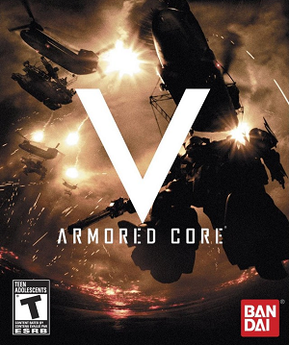
Armored Core V
PS3Xbox 360MechMainlineTimeline IV–VArmored Core V (2012) shifts to five-person mercenary squads and tighter online focus—loose Easter eggs reference AC4 wreckage but fiction is another reset.
- Overview
- Team-based mission structure and AC build sharing emphasize cooperative play over solo Raven narrative. Story is thinner—gameplay systems carry the entry.
- In-game setting
- Leads directly to Verdict Day faction war meta—play pair back-to-back if committing to Timeline V. Armored Core V (2012) shifts to five-person mercenary squads and tighter online focus—loose Easter eggs reference AC4 wreckage but fiction is another reset.
- Should you play it?
- Optional bridge to Verdict Day. Online population low in 2026—buy for campaign completion, not multiplayer. Follow Start Here if you want the shortest 2026 checklist that still includes this chapter.
- Release date
- US January 24, 2012 on PS3/Xbox 360. Platforms: PS3, Xbox 360.
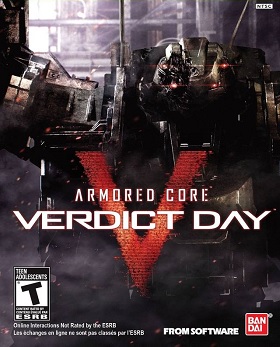
Armored Core: Verdict Day
PS3Xbox 360MechMainlineTimeline VVerdict Day (2013) closes the PS3 era with persistent faction conflict—last mainline before the decade gap to Fires of Rubicon.
- Overview
- Faction territory metagame layered on ACV mission framework—wins shift world state until finale campaigns. Some AC4 part references appear as lore Easter eggs only.
- In-game setting
- Timeline V endpoint—AC6 producer interviews confirm no direct story bridge. Verdict Day (2013) closes the PS3 era with persistent faction conflict—last mainline before the decade gap to Fires of Rubicon.
- Should you play it?
- Last classic stop before AC6 unless you are collecting the full set. Not story-required for Rubicon. Follow Start Here if you want the shortest 2026 checklist that still includes this chapter.
- Release date
- US September 24, 2013 on PS3/Xbox 360. Platforms: PS3, Xbox 360.
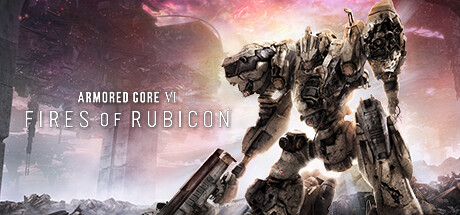
Armored Core VI: Fires of Rubicon
PS4PS5Xbox OneXbox SeriesPCMechMainlineTimeline VIArmored Core VI: Fires of Rubicon (2023) is the modern entry—planet Rubicon, coral catastrophe, stagger/ACS combat, and FromSoftware boss telegraph literacy applied to mech arenas.
- Overview
- Stagger breaks, ACS gauge, and mission freedom with mid-mission objective changes mirror Souls readability while keeping AC garage tuning. PC performance and mod community revived build-craft sharing.
- In-game setting
- Timeline VI Rubicon war—no save import. Prefer Soulsborne? Browse the [FromSoftware timeline](/fr. Armored Core VI: Fires of Rubicon (2023) is the modern entry—planet Rubicon, coral catastrophe, stagger/ACS combat, and FromSoftware boss telegraph literacy applied to mech arenas
- Should you play it?
- Default 2026 buy—standalone per Bandai Namco launch interviews. Start here; pick one retro generation only if AC6 hooks you. Essentials path AC6 only on this page.
- Release date
- US August 25, 2023 on PS4/PS5, Xbox One/Series, and PC (Steam 1888160). 60 fps on PS5/Series/PC recommended.
FAQ
Release vs story generations, AC6 standalone status, Nine Breaker, and save-carry titles.
Release order
Release order lists US ship dates from 1997 through 2023 (plus optional spin-offs). Story order groups timeline generations—each reset tells a separate fiction. There is no one continuous Armored Core plot across all numbered games.
Armored Core VI: Fires of Rubicon alone. It is a standalone Rubicon story—no save or lore homework from ACV. Retro fans can pick one generation (often AC3 era or AC4/For Answer) instead of playing all seventeen titles.
Timelines
No. Bandai Namco and FromSoftware stated Fires of Rubicon uses a new storyline without direct connection to Armored Core V. Gameplay knowledge helps, but fiction does not continue from Verdict Day.
Think in generations: Timeline I (AC1 + expansions), II (AC2), III (AC3 through Last Raven), IV (AC4/For Answer, loosely tied to ACV/Verdict Day), and VI (AC6). Each reset—you finish one generation before jumping to another.
Optional & related
More timelines
Other release-order and story-order guides on this site.
- Game series
FromSoftware
FromSoftware Soulsborne and action RPG release order (2009–2025)—Demon's Souls through…
- Game series
Dark Souls
Dark Souls trilogy release and story order (2011–2016)—Remastered, Scholar, DLC, and…
- Game series
Elden Ring
Elden Ring and FromSoftware release order (2011–2024)—Dark Souls through Sekiro,…
- Game series
Sekiro
Sekiro: Shadows Die Twice release and story order (2019)—base game, Game of the Year…
- Game series
DOOM
DOOM release and story order (1993–2025)—classic id Software through Doom Slayer, Doom…