
Watch order
Pokémon anime timeline
Major Pokémon TV story arcs in US English dub premiere order—from Kanto and Johto through Sun & Moon, Ash's Journeys finale, and Pokémon Horizons with Liko and Roy. one entry per arc, not every episode. The games timeline covers RPGs separately.
Release order
When each major Pokémon TV arc began in the US English dub—syndicated TV through streaming. Dates mark arc premieres, not every episode drop.
- Full marathon → start at Indigo League and follow the release-order list through Horizons
- Games-first fans → optional; anime parallels regions but is not game canon
- Latest story only → Pokémon Horizons (2024–) works without finishing Ash's run
- Theatrical Pokémon films → see the Pokémon movies watch order page in the FAQ below
Story order tips
Ash's in-universe journey region by region through Sun & Moon, then the World Coronation arc in Journeys. Horizons starts a new treasure-hunt plot with new leads—same Pokémon world, different heroes.
- Classic Ash → Kanto through Alola in order for callbacks and rival returns
- Journeys → capstone World Coronation arc—best after Sun & Moon
- Horizons → new cast; no need to finish Ash first unless you want full context
- Orange Islands → short detour after Kanto; safe to skip for a faster binge
Story order
Ash's in-universe journey region by region through Sun & Moon, then the World Coronation arc in Journeys. Horizons starts a new treasure-hunt plot with new leads—same Pokémon world, different heroes.
- Classic Ash → Kanto through Alola in order for callbacks and rival returns
- Journeys → capstone World Coronation arc—best after Sun & Moon
- Horizons → new cast; no need to finish Ash first unless you want full context
- Orange Islands → short detour after Kanto; safe to skip for a faster binge
Timeline
When each season premiered in the US. Expand a row for dates and where it fits in your watch order.
Release order
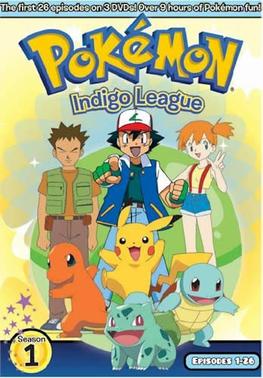
Pokémon: Indigo League
TVKantoClassicAsh leaves Pallet Town with Pikachu, challenges Kanto Gyms, and aims for the Indigo Plateau—the arc that introduced Pokémon TV to US kids. Team Rocket’s chase, Brock and Misty’s early travel party, and the League tournament set the show’s long-running formula.
- Overview
- Original series era (Japan 1997; US English dub 1998)—Kids’ WB / syndication turned Pocket Monsters into a weekday staple alongside Gen 1 games. Early dub edits, renamed characters, and cut episodes define how many Western fans first met the franchise.
- Related games
- Loosely tracks Gen 1 Kanto (Red/Blue/Yellow, later FireRed/LeafGreen). Gym order, Rocket plots, and League rules diverge—use Pokémon games for RPG chronology, not episode-for-episode mapping.
- Where it fits
- Start here for Ash’s full journey on Release. Optional theatrical side stories sit on Pokémon movies; skip to Horizons only if you want the newest cast without classic continuity.
- Premiere dates
- US English dub premiere September 8, 1998 (syndicated TV); Indigo League run spans roughly late 1998 through early 2000 before the Orange Islands detour.
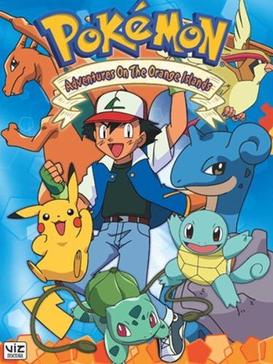
Adventures in the Orange Islands
TVOrange IslandsClassicAsh sails an anime-only archipelago between Kanto and Johto, chasing GS Ball lore and an Orange League of island gyms. No mainline RPG maps this region—pure TV bridging while Gold and Silver were still arriving in the West.
- Overview
- Filler-era bridge after Indigo League: Tracey Sketchit joins while Brock sits out much of the voyage. The Orange League replaces a traditional Badge run and kept the dub busy until Johto episodes were ready to air.
- Related games
- No Gen equivalent—absent from Pokémon games regional order. Treat as TV-only; Johto’s Gen 2 (Gold/Silver/Crystal) still lands next whether or not you watch this arc.
- Where it fits
- Optional on Release—Johto still makes sense if you jump from Indigo League. Early films from this era are optional flavor on Pokémon movies.
- Premiere dates
- US English dub premiere February 12, 2000; short season block through mid-2000 before Johto Journeys begins that October.
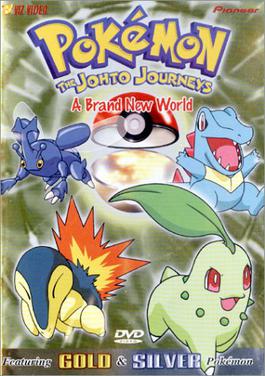
Pokémon: The Johto Journeys
TVJohtoClassicAsh’s first full sequel region: Johto Gyms, Baby Pokémon, and a long runway into the Silver Conference, with later seasons looping back toward Kanto rivals. Whitney, Clair, and the Johto League Champions stretch define the early-2000s dub era.
- Overview
- First direct sequel region on TV after Gen 2 launched—Johto Journeys, Johto League Champions, and Master Quest branding in the US. Longer League buildup, new rivals, and more serialized Gym travel than early Kanto filler weeks.
- Related games
- Parallels Gen 2 Johto (Gold/Silver/Crystal, later HeartGold/SoulSilver) with different Gym order and anime-only episodes. Compare region timelines on Pokémon games; movies remain side stories on Pokémon movies.
- Where it fits
- Watch after Indigo League (and Orange Islands if included) on Release. Strong pick if you finished Gen 2 games and want the TV Johto vibe without treating either as shared canon.
- Premiere dates
- US Johto arc premiere October 14, 2000; Johto League Champions / Master Quest continued through 2002 before the Advanced Generation rebrand.
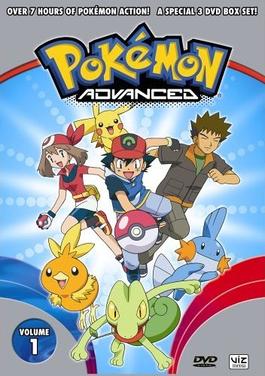
Pokémon the Series: Ruby and Sapphire (Advanced)
TVHoennClassicAsh reboots his travel party for Hoenn with May and Brock—Gym Badges plus May’s Contest climb across Advanced, Advanced Challenge, and Advanced Battle. Team Magma and Aqua plots echo the games without copying Ruby/Sapphire chapter beats.
- Overview
- Advanced Generation branding for Gen 3’s Hoenn era—Contest side plot runs beside Ash’s Gym quest. New art polish, Wallace/Contest culture, and a multi-season Hoenn League runway that felt like a soft series refresh for US viewers.
- Related games
- Ash reboots his travel party for Hoenn with May and Brock—Gym Badges plus May’s Contest climb across Advanced, Advanced Challenge, and Advanced Battle.
- Where it fits
- Standalone enough to start here on Release, but prior arcs explain recurring rivals. Pair with Gen 3 on Pokémon games only as flavor; theatrical Hoenn-era films sit on Pokémon movies.
- Premiere dates
- US Advanced premiere March 15, 2003; Advanced / Challenge / Battle seasons span roughly 2003–2006 before Battle Frontier.
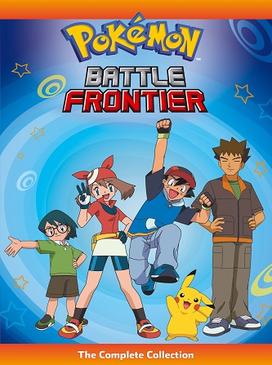
Pokémon: Battle Frontier
TVBattle FrontierClassicAsh tackles Kanto Battle Frontier facilities while May pivots toward Johto Contests—TV’s bridge between the Hoenn years and Sinnoh. Facility bosses and symbols adapt Emerald ideas into a shorter, challenge-of-the-week structure.
- Overview
- Emerald’s Battle Frontier adapted for weekly TV: Frontier Brains, symbols instead of Badges, and a Kanto-set epilogue after Hoenn’s League. May’s Contest farewell and Ash’s Frontier climb reset the cast for Diamond & Pearl.
- Related games
- Closest game peer is Gen 3 Emerald’s Battle Frontier (later revisited in remakes)—anime path and cast still diverge. Not a full region on Pokémon games; treat as Advanced epilogue before Sinnoh RPGs.
- Where it fits
- Watch after Advanced on Release; skippable if you jump straight to Diamond & Pearl. Optional films from this window live on Pokémon movies.
- Premiere dates
- US premiere September 9, 2006; Battle Frontier season runs into 2007 until Diamond & Pearl launches that June.
Pokémon the Series: Diamond and Pearl
TVSinnohClassicAsh and Dawn take on Sinnoh Gyms and Contests while Team Galactic’s multi-season scheme builds toward Lake guardians and a longer League runway. Often cited as a mid-series peak for pacing, rivals, and Contest spectacle.
- Overview
- Gen 4 Sinnoh era on TV—Dawn’s Contest arc returns May’s formula with denser rivalry (Paul, Zoey) and a drawn-out Sinnoh League. Darker Galactic mythology and longer story arcs than earlier filler-heavy years.
- Related games
- Echoes Gen 4 (Diamond/Pearl/Platinum, later remakes) without matching Galactic chapter order or League format. Cross-check regions on Pokémon games; Sinnoh theatrical titles are optional on Pokémon movies.
- Where it fits
- Strong mid-series entry on Release if you want modern-ish pacing without the 1998 marathon. Play Gen 4 separately—anime is not a walkthrough of the DS games.
- Premiere dates
- US premiere June 4, 2007; Diamond and Pearl / Battle Dimension / Galactic Battles / Champions stretch through 2010.

Pokémon the Series: Black & White
TVUnovaClassicAsh lands in Unova with Iris and Cilan for a soft-reboot tone: new art, a lighter cast, and Team Plasma threads adapted for kids’ TV. Best Wishes seasons push Gen 5’s “new region, new rules” pitch harder than prior sequel arcs.
- Overview
- Japanese Best Wishes! era for Gen 5—fresher character designs, shorter companion roster, and Unova-first Pokémon focus early on. US seasons (Black & White, Rival Destinies, Adventures in Unova) keep the soft-reboot feel for returning viewers.
- Related games
- Unova Gyms and Plasma echo Gen 5 (Black/White, Black 2/White 2), but N’s role and plot beats are anime-specific. See Pokémon games for RPG Unova order; movies stay optional on Pokémon movies.
- Where it fits
- Watchable without Hoenn/Sinnoh on Release, though callbacks land better afterward. Pair with Gen 5 games only as parallel flavor—not shared canon.
- Premiere dates
- US premiere September 17, 2011; Black & White through Adventures in Unova spans roughly 2011–2013 before XY.
Pokémon the Series: XY
TVKalosClassicAsh’s Kalos Gym quest with Serena, Clemont, and Bonnie—Mega Evolution battles, a tighter League arc, and the Ash–Greninja bond that became a fan landmark. XY and XYZ seasons are frequent “modern start” recommendations.
- Overview
- XY-era animation upgrade for Gen 6: smoother battles, Mega Evolution set pieces, and a more serialized Kalos League climb. Serena’s Performer path and Team Flare’s climax give the arc a clearer endgame than many earlier regions.
- Related games
- Kalos landmarks and Gym Leaders nod to Gen 6 (X/Y, later Legends Z-A era interest)—Flare climax still diverges. Compare RPG Kalos on Pokémon games; XY-era films are side stories on Pokémon movies.
- Where it fits
- Fan-favorite League season—solid modern entry on Release if you skip 1990s arcs. Play X/Y separately; do not expect matching Team Flare beats episode-to-chapter.
- Premiere dates
- US premiere January 18, 2014; XY through XYZ seasons span 2014–2016 before Sun & Moon’s Disney XD run.

Pokémon the Series: Sun & Moon
TVAlolaClassicAsh’s Alola Island Challenge trades Gyms for Trials and Grand Trials, with school-comedy tone and chibi gag segments. It is his last full regional arc before Journeys’ world-tour capstone—character payoffs matter more if you continue.
- Overview
- Gen 7 Alola format on TV: Pokémon School cast, Trials instead of Badges, and a looser sitcom rhythm than Kalos. Ultra Beasts and Manalo Conference stakes still build, but weekly tone stays brighter and gag-heavier than XY.
- Related games
- Shares Alola cast and Ultra themes with Gen 7 (Sun/Moon, Ultra Sun/Ultra Moon) while Trial order and Necrozma plotting diverge. RPG path lives on Pokémon games; Alola films are optional on Pokémon movies.
- Where it fits
- Watch before Journeys on Release for Ash’s Alola payoff. Fine modern start if you accept school-arc tone; Horizons still needs no Alola homework.
- Premiere dates
- US Disney XD premiere March 17, 2017; Sun & Moon through Ultra Legends spans roughly 2017–2019 before Journeys moves to Netflix.
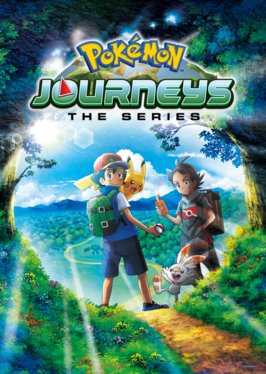
Pokémon Journeys: The Series
TVNetflixWorld tourJourneysAsh and Goh hop regions while Ash climbs the World Coronation Series toward the Masters Eight—cameos from past companions and a finale for the classic hero. Later seasons (Master Journeys, Ultimate Journeys) and Aim to Be a Pokémon Master close the Ash era.
- Overview
- Post-Alola “world tour” structure for the Sword/Shield generation: Project Mew, Dynamax glimpses, and a ranked battle ladder instead of one regional Gym run. Goh’s catch-quest co-leads early seasons; Ash’s championship chase becomes the emotional endgame.
- Related games
- Region hops and Galar/Paldea cameos mirror modern geography loosely—plot is anime-only, not a Sword/Shield adaptation. Context for game gens sits on Pokémon games; theatrical titles remain separate on Pokémon movies.
- Where it fits
- Best after Sun & Moon on Release—not a clean newcomer start. Skip ahead to Horizons if you only want Liko and Roy; watch Journeys when you want Ash’s capstone.
- Premiere dates
- US Netflix premiere June 12, 2020; Journeys through Aim to Be a Pokémon Master concludes the Ash TV run in 2023 before Horizons.

Pokémon Horizons: The Series
TVNetflixHorizonsNew castLiko and Roy join the Rising Volt Tacklers on a treasure-hunt mystery—new leads after Ash’s era ends. Ongoing series as of 2026; designed so newcomers can board without finishing twenty-five years of Indigo-to-Journeys continuity.
- Overview
- Post-Ash TV direction from The Pokémon Company: dual protagonists, airship crew, and a serialized pendant/ancient Pokémon mystery. Less “Gym of the week,” more adventure-crew storytelling aimed at a fresh audience while keeping the same Pokémon world.
- Related games
- Touches modern regions lightly—not a Scarlet/Violet retelling. Play current gens via Pokémon games on their own; films stay optional context on Pokémon movies.
- Where it fits
- Start here on Release for the latest TV story without Ash—or watch after Journeys for full continuity. No required game order beforehand.
- Premiere dates
- US Netflix premiere March 7, 2024; Horizons seasons still airing as of 2026 (Japan continues ahead of the dub).
FAQ
Watch vs story order, anime vs game canon, Horizons as a fresh start, and where theatrical films fit.
Watch order
Full Ash path: Indigo League → (optional Orange Islands) → Johto → Advanced → Battle Frontier → Diamond & Pearl → Black & White → XY → Sun & Moon → Journeys → Horizons. Shortcut: start at XY or Sun & Moon for modern pacing, then Journeys. Latest only: Horizons alone works for Liko and Roy.
Not required. Horizons follows Liko and Roy with a new treasure-hunt story. Watching Journeys first explains why Ash no longer leads the show, but Horizons is designed as an entry point for newcomers.
Anime & games
No. The TV series shares regions and characters with the RPGs but uses its own episode plots, League rules, and filler. You can play Scarlet/Violet or any remake without watching anime, and you can binge the show without playing the matching games. Treat them as related adaptations, not one canon.
Optional & extras
More timelines
Other release-order and story-order guides on this site.
- Game series
Pokémon
Pokémon mainline RPGs in US release order (1998–2025) and regional story…
- Game series
Pokémon Spin-Offs
Pokémon spin-off games in US release order (1999–2021)—Snap, Stadium, Orre, Ranger,…
- Game series
Pokémon Mystery Dungeon
Pokémon Mystery Dungeon games in US release and play order (2005–2020)—Rescue Team…
- Media
Pokémon Films
Pokémon theatrical films in US watch order (1999–2021)—Mewtwo Strikes Back through…
- Game series
Pokémon TCG Games
Pokémon Trading Card Game video games in US release order (1999–2024)—Game Boy Color,…
- Consoles
Nintendo consoles
All Nintendo consoles in US release order (1985–2025)—NES through Switch 2, Game Boy,…