
US launch dates · 1972–2025
Video game console timeline
Console generations and video game console timeline—US launch dates from Magnavox Odyssey (1972) through PS5 and Switch 2. See PlayStation consoles, Nintendo consoles, and Xbox consoles for brand lists. A chronological history of major US home and hybrid video game consoles—from the Magnavox Odyssey (1972), widely cited as the first commercial home system, through PlayStation 5, Xbox Series X, and Switch 2—with generation tags and standout launch titles.
At a glance
Magnavox Odyssey (1972) → NES (1985) → PlayStation (1995) → PS2 / Xbox (2000–01) → PS4 / Switch (2013–17) → PS5 / Series X (2020). Release order lists when each *Game consoles* chapter shipped so you can buy current editions and see remasters as separate rows when they matter.
Tap a year to jump straight to that console.
Console release order
When each console launched in the US — from the Magnavox Odyssey to today.
First generation
1972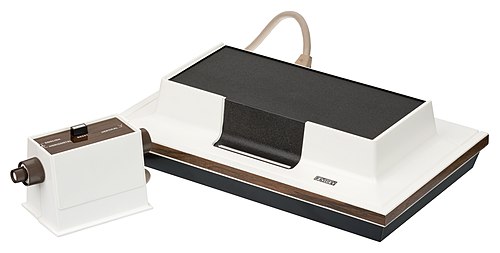 Mg
MgMagnavox Odyssey
Magnavox Odyssey (1972)—shipped with removable circuit cards instead of ROM cartridges — each card rewired the machine for a different game. Came with overlays you placed on the TV screen because the hardware could only draw dots and lines.
- What's new
- Shipped with removable circuit cards instead of ROM cartridges — each card rewired the machine for a different game. Came with overlays you placed on the TV screen because the hardware could only draw dots and lines.
- Hardware
- No CPU in the modern sense; analog circuitry designed by Ralph Baer. Model series included the original Odyssey (1972) and later Odyssey 100/200 variants. Output was black-and-white RF to a television.
- Standout games
- Table Tennis (the Pong-style game that later sparked Atari's arcade hit), Simon Says, Ski, and other bundled titles — about 28 games across cards and built-ins.
- Context
- Sold through Magnavox dealers, not mass retail. Atari's home Pong (1975) and the 2600 (1977) eventually made interchangeable media the standard Odyssey lacked.
Second generation
1977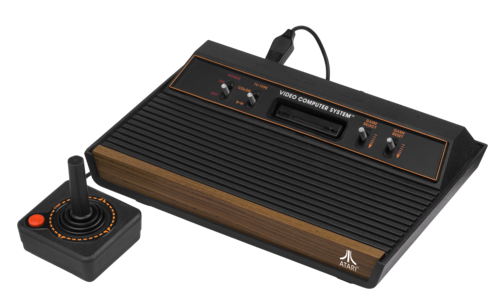 A
AAtari 2600
Atari 2600 (1977)—used microprocessor-based design with ROM cartridges, so libraries could grow for years. The 1977 VCS launch price dropped over time, which helped consoles spread beyond hobbyists.
- What's new
- Used microprocessor-based design with ROM cartridges, so libraries could grow for years. The 1977 VCS launch price dropped over time, which helped consoles spread beyond hobbyists.
- Hardware
- MOS 6507 CPU at 1.19 MHz, 128 bytes of RAM, TIA chip for graphics and sound. Common bundles included the six-switch wood-grain model and later cost-reduced revisions.
- Standout games
- Adventure (early action-adventure), Space Invaders (1980 arcade port that doubled system sales), Pitfall!, Pac-Man (best-selling but widely panned port), Asteroids, and Missile Command.
- Context
- Compared to the fixed-game Pong clones of the mid-1970s, the 2600 could play hundreds of distinct titles. Its success also led to the 1983 crash when too many low-quality games flooded stores.
Third generation
1985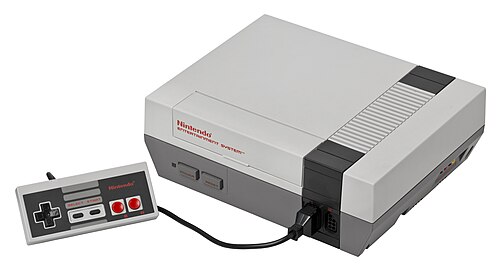 N
NNES
Nintendo Entertainment System (NES) (1985)—nintendo sold it as an 'Entertainment System' with R.O.B. and the Zapper to distance it from failed game consoles. Strict third-party licensing and the Official Nintendo Seal reduced shovelware.
- What's new
- Nintendo sold it as an 'Entertainment System' with R.O.B. and the Zapper to distance it from failed game consoles. Strict third-party licensing and the Official Nintendo Seal reduced shovelware.
- Hardware
- Ricoh 2A03 (6502-based) at 1.79 MHz, 2 KB RAM, Picture Processing Unit for scrollable tile backgrounds. US front-loader model; later top-loader redesign.
- Standout games
- Super Mario Bros. (bundled with many systems), The Legend of Zelda, Metroid, Mega Man 2, Castlevania, Duck Hunt, and Kirby's Adventure (late-life showcase).
- Context
- 8-bit rival to Sega Master System in the US, but Nintendo dominated shelf space. Cartridges held more data than Atari 2600 carts, enabling larger worlds and saved progress (via battery-backed SRAM in some titles).
Fourth generation
1989–1991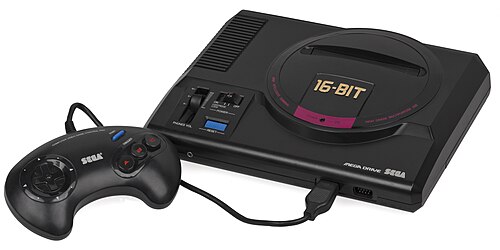 N
NGenesis
Sega Genesis (1989)—early US 16-bit machine with arcade-accurate ports. 'Genesis does what Nintendon't' campaign targeted sports and mature titles. Added Sega CD and 32X add-ons (mixed success).
- What's new
- Early US 16-bit machine with arcade-accurate ports. 'Genesis does what Nintendon't' campaign targeted sports and mature titles. Added Sega CD and 32X add-ons (mixed success).
- Hardware
- Motorola 68000 at 7.6 MHz plus Z80 co-processor, Yamaha FM sound. Model 1 (1989) with high-quality analog audio; Model 2 slim revision (1993).
- Standout games
- Sonic the Hedgehog (system seller), Streets of Rage II, Phantasy Star IV, Gunstar Heroes, NHL '94, Mortal Kombat (blood code via ABACABB), and NBA Jam.
- Context
- Fought the SNES for US market share through price cuts and sports licensing. Strong in North America but weaker in Japan where the Super Famicom led.
 N
NSNES
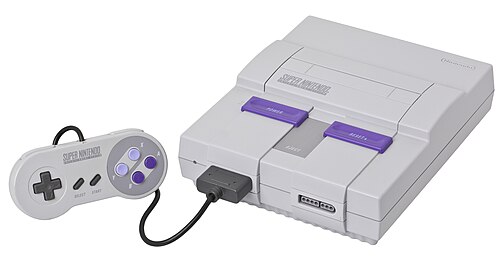
Super Nintendo (SNES) (1991)—mode 7 allowed pseudo-3D rotation and scaling (F-Zero, Super Mario Kart). Major Japanese studios brought arcade fighters and story-heavy RPGs that defined the generation.
- What's new
- Mode 7 allowed pseudo-3D rotation and scaling (F-Zero, Super Mario Kart). Major Japanese studios brought arcade fighters and story-heavy RPGs that defined the generation.
- Hardware
- Ricoh 5A22 (65816-based) at 3.58 MHz, 128 KB RAM, PPU with 32,768 colors. US 'fat' shell; later SNES Mini-style Jr. model in 1997.
- Standout games
- Super Mario World, A Link to the Past, Super Metroid, Chrono Trigger, Final Fantasy VI, Donkey Kong Country (pre-rendered 3D look on 2D hardware), and Street Fighter II Turbo.
- Context
- Outsold Genesis worldwide but the US gap was closer than in Japan. Cartridges could include special chips (Super FX in Star Fox) to push past base hardware limits.
Fifth generation
1995–1996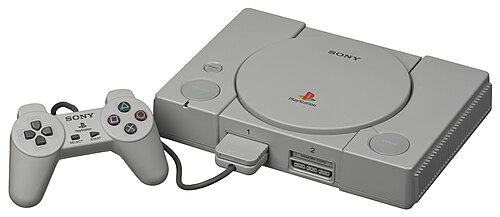 S
SPS1
Sony PlayStation (1995)—cD-ROM discs held far more data than cartridges and cost less to manufacture. The DualShock controller (1997) added dual analog sticks and became the template for modern gamepads. Strong third-party support from Japanese and Western studios.
- What's new
- CD-ROM discs held far more data than cartridges and cost less to manufacture. The DualShock controller (1997) added dual analog sticks and became the template for modern gamepads. Strong third-party support from Japanese and Western studios.
- Hardware
- 32-bit R3000 CPU at 33.8 MHz, 2 MB RAM, Geometry Transformation Engine for 3D math. Original gray model, later PS one mini redesign (2000).
- Standout games
- Final Fantasy VII, Metal Gear Solid, Gran Turismo, Resident Evil, Tomb Raider, Crash Bandicoot, Spyro the Dragon, Tekken 3, and PaRappa the Rapper.
- Context
- Launched after the Sega Saturn but a full year before the Nintendo 64, and eventually outsold both. Nintendo's choice to stick with cartridges for N64 pushed Square and Enix toward PlayStation RPGs.
 N
NN64
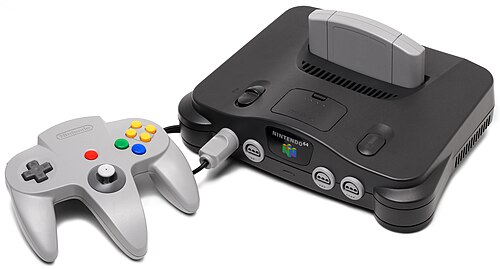
Nintendo 64 (1996)—analog stick built into the standard controller — required for Super Mario 64's camera and movement. Four controller ports encouraged local multiplayer. Rare and Nintendo pushed real-time 3D platformers and racers.
- What's new
- Analog stick built into the standard controller — required for Super Mario 64's camera and movement. Four controller ports encouraged local multiplayer. Rare and Nintendo pushed real-time 3D platformers and racers.
- Hardware
- 64-bit NEC VR4300 CPU at 93.75 MHz, 4 MB RDRAM (Expansion Pak later added 4 MB more), SGI-derived Reality Coprocessor. Cartridges up to 64 MB but expensive versus CDs.
- Standout games
- Super Mario 64, The Legend of Zelda: Ocarina of Time, GoldenEye 007, Mario Kart 64, Banjo-Kazooie, Perfect Dark, and Super Smash Bros.
- Context
- Lost much of the RPG audience to PlayStation but dominated couch multiplayer and first-party quality. Long load times were absent (cartridges) but storage limits hurt FMV-heavy genres.
Sixth generation
1999–2001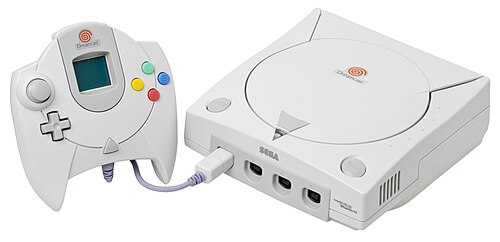 SE
SEDreamcast
Sega Dreamcast (1999)—built-in modem for online play (Phantasy Star Online, ChuChu Rocket!). VMU memory cards with tiny screens. Arcade-perfect Naomi hardware roots. Windows CE dev tools lowered PC port barriers.
- What's new
- Built-in modem for online play (Phantasy Star Online, ChuChu Rocket!). VMU memory cards with tiny screens. Arcade-perfect Naomi hardware roots. Windows CE dev tools lowered PC port barriers.
- Hardware
- Hitachi SH-4 at 200 MHz, PowerVR2 graphics, 16 MB RAM, GD-ROM discs (1 GB). Models included launch white, later limited colors; VGA box supported 480p on some games.
- Standout games
- Sonic Adventure, Shenmue (open-world ambition), Jet Set Radio, Crazy Taxi, Soulcalibur (arcade-perfect launch title), Skies of Arcadia, and NFL 2K1.
- Context
- Beaten to market by hype for PS2; Sega exited hardware in 2001. Still cited for creative risks and online features years ahead of Xbox Live's mainstream push.
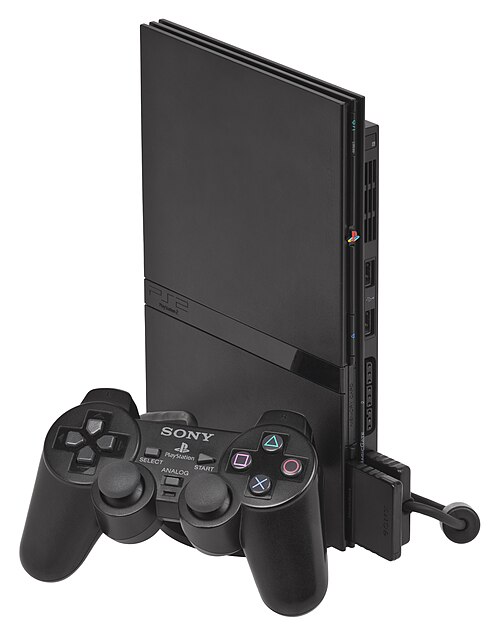 S
SPS2
Best-selling console of all time — DVD player hook mattered as much as games for many buyers.
- What's new
- DVD playback made it an easy sell to parents. Backward compatible with PS1 discs and controllers at launch. DVD-sized storage enabled huge worlds, voice acting, and cinematic cutscenes at scale.
- Hardware
- Emotion Engine CPU + Graphics Synthesizer, 32 MB RAM. Slimline PSTwo revision (2004) reduced size. Network adapter add-on enabled early online titles like SOCOM.
- Standout games
- Grand Theft Auto: San Andreas, Shadow of the Colossus, God of War, Kingdom Hearts, Metal Gear Solid 3, Final Fantasy X, Guitar Hero, and Katamari Damacy.
- Context
- Outlasted GameCube and Xbox by years; production continued until 2013. Weak online versus Xbox Live but unbeatable software breadth and install base.
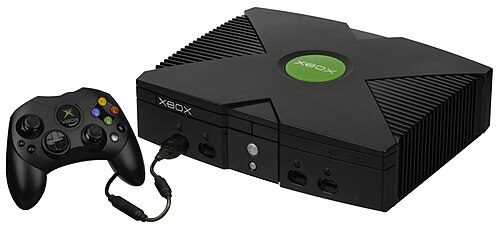 M
MXbox
Microsoft Xbox (2001)—standard 8 GB hard drive saved games and enabled faster loads without memory cards. Xbox Live (2002) unified friends, voice chat, and patches — paid subscription model copied later industry-wide.
- What's new
- Standard 8 GB hard drive saved games and enabled faster loads without memory cards. Xbox Live (2002) unified friends, voice chat, and patches — paid subscription model copied later industry-wide.
- Hardware
- Custom Intel Pentium III at 733 MHz, NVIDIA NV2A GPU, 64 MB unified memory. Large controller ('Duke') replaced by Controller S. DVD-ROM media.
- Standout games
- Halo: Combat Evolved (system seller), Halo 2 (online phenomenon), Fable, Ninja Gaiden, Star Wars: Knights of the Old Republic, and Forza Motorsport.
- Context
- Lost the generation in total sales to PS2 but gained a foothold in North America and established Live as a service platform. DirectX heritage made PC ports easier than on PS2.
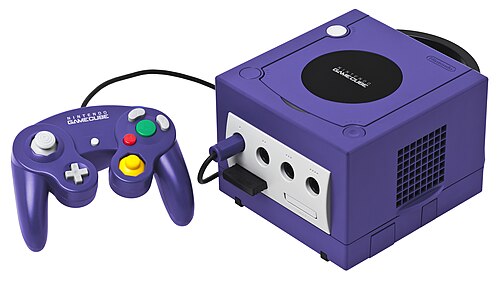 N
NGameCube
Nintendo GameCube (2001)—optical mini-DVD discs (1.5 GB) discouraged DVD movie playback but cut piracy fears. GBA link cable let you use the handheld as a controller or second screen in some titles.
- What's new
- Optical mini-DVD discs (1.5 GB) discouraged DVD movie playback but cut piracy fears. GBA link cable let you use the handheld as a controller or second screen in some titles.
- Hardware
- IBM Gekko PowerPC at 485 MHz, ATI Flipper GPU, 24 MB RAM + 16 MB audio RAM. Proprietary 8 cm discs; broadband adapter add-on for limited online play.
- Standout games
- Super Smash Bros. Melee (still a tournament staple), Metroid Prime, The Legend of Zelda: The Wind Waker, Mario Kart: Double Dash!!, Resident Evil 4 (timed exclusive), and Pikmin.
- Context
- Third place in sales but strong Nintendo first-party quality. Lacked the multimedia story of PS2/Xbox and struggled with third-party sports and mature franchises.
Seventh generation
2005–2006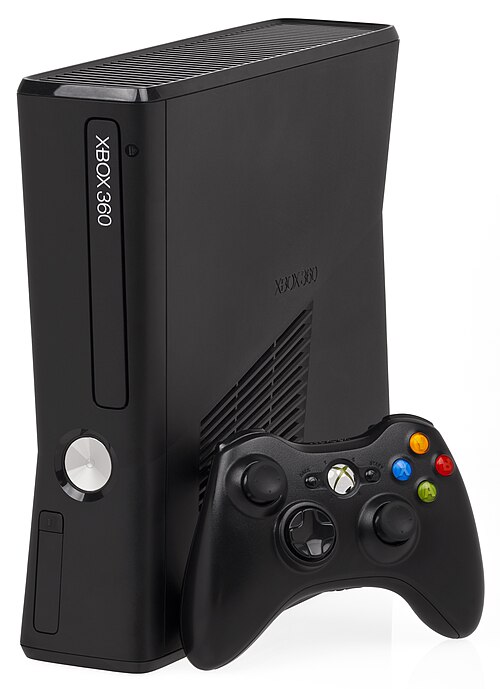 M
MXbox 360
Xbox 360 (2005)—xbox Live Arcade brought digital downloads (Geometry Wars, Braid). Achievements spread across the industry. Kinect (2010) optional motion camera sold tens of millions but split developer focus.
- What's new
- Xbox Live Arcade brought digital downloads (Geometry Wars, Braid). Achievements spread across the industry. Kinect (2010) optional motion camera sold tens of millions but split developer focus.
- Hardware
- IBM Xenon triple-core at 3.2 GHz, ATI Xenos GPU, 512 MB unified RAM. Several models: Core, Premium, Elite; later slim model. Early 'Red Ring of Death' reliability crisis on launch hardware.
- Standout games
- Gears of War, Halo 3, Mass Effect, BioShock, The Elder Scrolls IV: Oblivion, Call of Duty 4: Modern Warfare (multiplayer host), and Red Dead Redemption.
- Context
- Beat PS3 to market by a year in the US. Strong Western online shooters; PlayStation 3 eventually caught up in exclusives but 360 led much of the generation in North America.
 S
SPS3
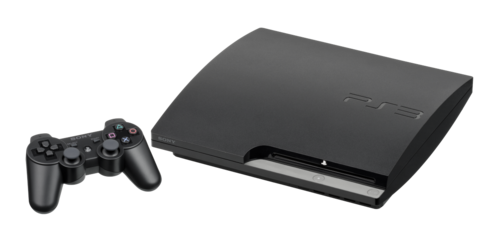
PlayStation 3 (2006)—cell processor was hard to program but powerful when mastered. PlayStation Network added free online (later PS Plus). DualShock 3 added motion sensors; Sixaxis preceded it.
- What's new
- Cell processor was hard to program but powerful when mastered. PlayStation Network added free online (later PS Plus). DualShock 3 added motion sensors; Sixaxis preceded it.
- Hardware
- Cell Broadband Engine + RSX GPU, 256 MB XDR RAM. 20 GB and 60 GB launch models backward-compatible with PS2; later models removed chip. Blu-ray Disc (BD) up to 50 GB dual-layer.
- Standout games
- The Last of Us, Uncharted 2, God of War III, Demon's Souls, Metal Gear Solid 4, Gran Turismo 5, Journey, and Persona 5 (late port).
- Context
- Launched at $499 (20 GB) and $599 (60 GB) — steep for 2006. Xbox 360 head start hurt early adoption. Exclusives and Blu-ray value helped PS3 recover; sold more units worldwide than Xbox 360 by generation's end.
 N
NWii
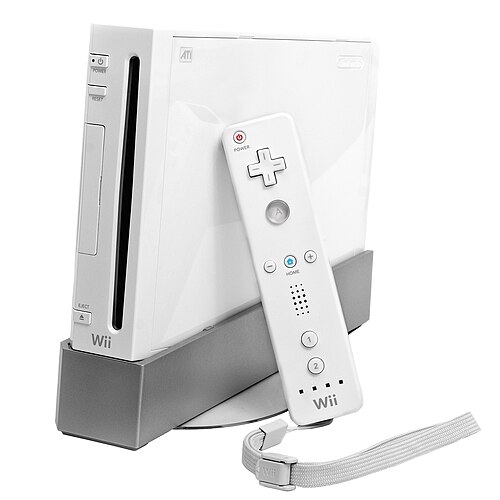
Nintendo Wii (2006)—wii Remote pointer and accelerometer made bowling and tennis intuitive in Wii Sports. Virtual Console sold retro downloads. Mii avatars appeared across channels and games.
- What's new
- Wii Remote pointer and accelerometer made bowling and tennis intuitive in Wii Sports. Virtual Console sold retro downloads. Mii avatars appeared across channels and games.
- Hardware
- PowerPC Broadway at 729 MHz (GameCube-derived), 88 MB RAM, standard-definition focus. Wii MotionPlus add-on (2009) improved sword and pointer accuracy. No HDMI out at launch.
- Standout games
- Wii Sports (pack-in phenomenon), Wii Fit, Mario Kart Wii, Super Mario Galaxy, The Legend of Zelda: Skyward Sword, Super Smash Bros. Brawl, and Xenoblade Chronicles.
- Context
- Lower horsepower than rivals but outsold both in total units. Third-party AAA ports often skipped Wii due to weak specs; Nintendo first-party and casual titles carried the brand.
Eighth generation
2013–2017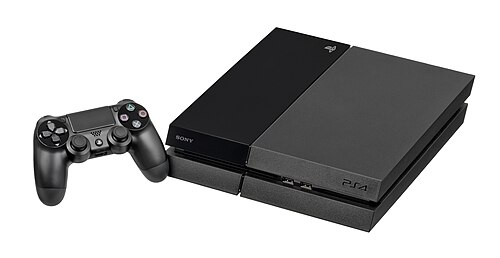 S
SPS4
Sony leaned into social sharing, indie games, and player-focused messaging after PS3's rough start.
- What's new
- Share button for screenshots and clips. PS4 Pro (2016) added 4K upscaling and HDR for mid-gen upgrade path. Strong courting of indie devs at launch compared to Xbox One's TV pivot.
- Hardware
- AMD Jaguar x86-8 cores at 1.6 GHz, Radeon GPU 1.84 TFLOPS, 8 GB GDDR5. Models: original, slim, Pro. DualShock 4 touchpad and light bar for motion tracking.
- Standout games
- God of War (2018), Horizon Zero Dawn, Bloodborne, Spider-Man, The Last of Us Part II, Ghost of Tsushima, Persona 5 Royal, and Monster Hunter: World.
- Context
- Won the generation decisively over Xbox One worldwide. Nintendo Switch later sold more lifetime units but PS4 dominated HD home consoles of the 2010s.
 M
MXbox One
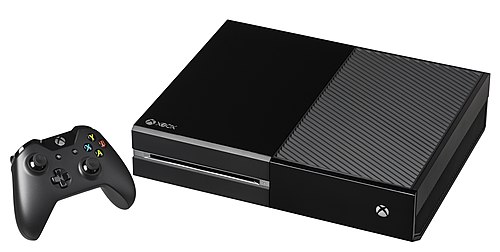
Xbox One (2013)—xbox Game Pass (2017) shifted toward subscription library access. Backward compatibility with Xbox 360 and original Xbox titles via emulation. Xbox One X (2017) targeted native 4K for enthusiasts.
- What's new
- Xbox Game Pass (2017) shifted toward subscription library access. Backward compatibility with Xbox 360 and original Xbox titles via emulation. Xbox One X (2017) targeted native 4K for enthusiasts.
- Hardware
- AMD Jaguar x86-8 cores, 8 GB DDR3 + 32 MB ESRAM, Blu-ray drive. Launch bundled Kinect 2.0 (later removed to cut price). Xbox One S added HDR and 4K Blu-ray.
- Standout games
- xbox Game Pass (2017) shifted toward subscription library access. Backward compatibility with Xbox 360 and original Xbox titles via emulation. Forza Horizon 4, Halo 5, Gears 5, Ori and the Blind Forest, Sea of Thieves, Sunset Overdrive, and Cuphead.
- Context
- Lost the exclusives narrative to PS4 early on. Game Pass and studio acquisitions (Bethesda, Activision Blizzard deal later) became the long-term strategy rather than winning unit sales this generation.
 N
NSwitch
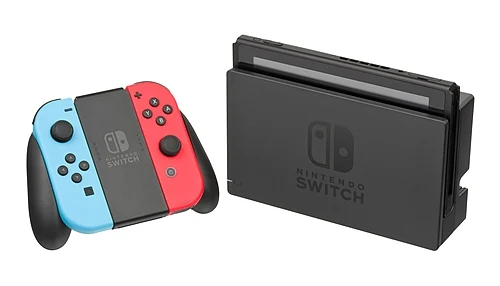
Nintendo Switch (2017)—joy-Con controllers detach for local multiplayer anywhere. Cartridge-based portable play with docked HDMI output. Hybrid success let Nintendo skip a traditional living-room arms race on raw TFLOPS.
- What's new
- Joy-Con controllers detach for local multiplayer anywhere. Cartridge-based portable play with docked HDMI output. Hybrid success let Nintendo skip a traditional living-room arms race on raw TFLOPS.
- Hardware
- NVIDIA Tegra X1-based custom chip, 4 GB RAM, 720p handheld / 1080p docked typical output. Models: original, battery revision (2019), Switch Lite (handheld-only), OLED model (2021) with better screen.
- Standout games
- The Legend of Zelda: Breath of the Wild, Super Mario Odyssey, Animal Crossing: New Horizons, Mario Kart 8 Deluxe, Splatoon 2, Pokémon Scarlet/Violet, and Tears of the Kingdom.
- Context
- Underpowered vs PS4/Xbox One on paper but became Nintendo's best-selling home platform line worldwide. Third-party support improved over PS/Wii U eras thanks to unified install base.
Ninth generation
2020–2025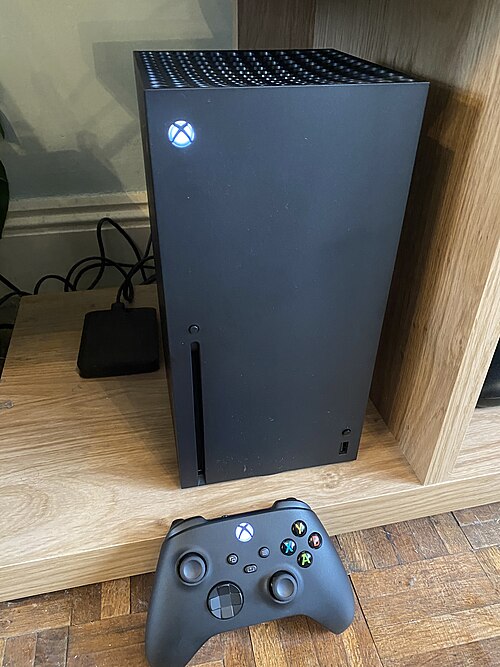 M
MSeries X | S
Xbox Series X | S (2020)—quick Resume suspends multiple games instantly. Smart Delivery gives Series X|S owners the best version of cross-gen purchases free. Xbox Game Pass bundled into Microsoft's core pitch.
- What's new
- Quick Resume suspends multiple games instantly. Smart Delivery gives Series X|S owners the best version of cross-gen purchases free. Xbox Game Pass bundled into Microsoft's core pitch.
- Hardware
- Series X: Zen 2 CPU, 12 TFLOPS RDNA 2 GPU, 1 TB SSD, disc drive. Series S: digital-only, 512 GB SSD, lower GPU (1440p target), smaller form factor. Velocity Architecture for I/O.
- Standout games
- Forza Horizon 5, Halo Infinite, Starfield, Hi-Fi Rush, Microsoft Flight Simulator, and Game Pass day-one titles like Redfall and Pentiment.
- Context
- Series S lowers entry price but weaker specs split developer targets. Microsoft prioritizes Game Pass and cloud over winning pure console unit counts versus Sony.
 S
SPS5
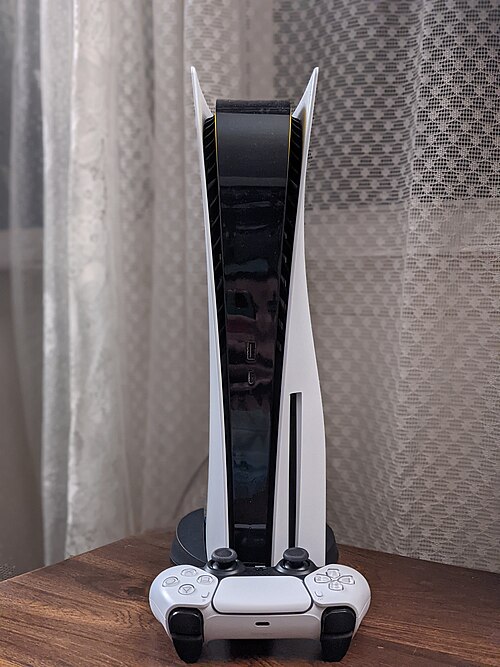
PlayStation 5 (2020)—ultra-fast SSD with hardware Kraken compression — games like Ratchet & Clank: Rift Apart showcase instant world swaps. DualSense haptics and adaptive triggers add resistance per action.
- What's new
- Ultra-fast SSD with hardware Kraken compression — games like Ratchet & Clank: Rift Apart showcase instant world swaps. DualSense haptics and adaptive triggers add resistance per action.
- Hardware
- AMD Zen 2 8 cores at 3.5 GHz, RDNA 2 GPU 10.28 TFLOPS, 16 GB GDDR6, 825 GB SSD. Two models: disc model and Digital Edition. PS5 Slim revision (2023) shrunk chassis and storage options.
- Standout games
- Marvel's Spider-Man 2, Demon's Souls (remake), Returnal, Final Fantasy XVI, God of War Ragnarök, Horizon Forbidden West, and Astro's Playroom (pack-in DualSense demo).
- Context
- Competes with Xbox Series X on specs but Sony maintained strong exclusive narrative early in the generation. Supply shortages in 2020–2022 slowed early adoption.
 N
NSwitch 2
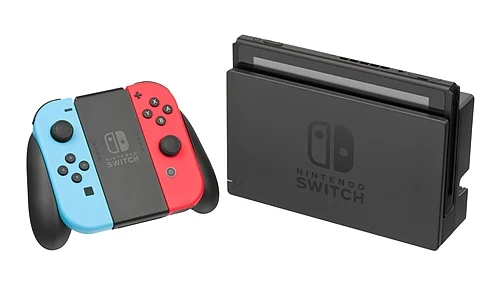
Nintendo's Switch sequel — hybrid play with a bigger screen and full backward compatibility with Switch games.
- What's new
- Keeps hybrid handheld/TV play while closing much of the gap with PS4/Xbox One-era performance. Plays the entire Switch library and adds enhanced patches for select titles. Joy-Con 2 attach magnetically and can act as a mouse in supported games.
- Hardware
- Custom NVIDIA system-on-chip, 12 GB RAM, 7.9-inch 1080p HDR LCD at up to 120 Hz handheld; up to 4K at 60 Hz when docked. 256 GB internal storage. Launched in the US on June 5, 2025 at $449.99.
- Standout games
- Mario Kart World (launch-day showcase and bundle title), The Legend of Zelda: Breath of the Wild and Tears of the Kingdom (free performance upgrades), Donkey Kong Bananza, and Kirby Air Riders.
- Context
- Like the original Switch, Nintendo avoids a raw spec war with PS5/Xbox and sells on exclusives, portability, and backward compatibility. Strong launch demand led to retail shortages in summer 2025.
How generations overlap
Each band shows one hardware generation and how long it ran. Generations often overlap — new consoles kept arriving while older ones were still on store shelves.
- 1st 1972–1980
- 2nd 1976–1992
- 3rd 1983–2003
- 4th 1987–2004
- 5th 1993–2006
- 6th 1998–2013
- 7th 2005–2018
- 8th 2012–present
- 9th 2020–present
FAQ
First and oldest consoles, how US release dates are ordered on this timeline, console generations, and Nintendo or Xbox launch years.
Basics
The Magnavox Odyssey (1972) is widely cited as the first commercial home video game console sold in the US. Dedicated pong TVs and arcade machines came earlier; Odyssey was the first interchangeable home system most history timelines begin with.
Generations
Console generations are informal groupings by era and capability—the evolution from 2D sprites to 3D polygons, SD to HD, and disc to hybrid portable. Tags on this page (2nd gen, 8th gen, etc.) mark common US retail history groupings; Japan and Europe may label the same hardware differently.