
Release & story order
Super Smash Bros games in order
This smash bros games in order page tracks Nintendo’s crossover fighter mainline with US release dates—from Super Smash Bros. on N64 through Melee, Brawl, the dual Smash 4 releases on 3DS and Wii U, and Super Smash Bros. Ultimate on Switch. Release is the collector and hardware history most fans need. Story is soft roster continuity: each game rebuilds the cast and modes for a new platform era rather than a single spoilery saga you must finish in sequence. Start with Ultimate in 2026 for the biggest roster; Subspace Emissary and World of Light sit in FAQ as optional adventure modes. Nintendo neighbors: Mario games, Zelda timeline, and Pokémon.
Pick your path:
Where to start
Pick Ultimate only for the 2026 default roster, Classic path for every US mainline from N64 through Ultimate (including both Smash 4 versions), or Competitive modern when you only care about the current Switch scene. Adventure DLC and older competitive niches stay in FAQ so newcomers are not forced into every hardware generation.
- Ultimate does not require finishing older Smash games first
- Melee remains a separate competitive culture—optional beside Ultimate
- Smash 4 3DS and Wii U are both listed for collectors; play either or both
Release order
US mainline ship order: Super Smash Bros. on N64 (April 26, 1999) → Melee on GameCube (December 3, 2001) → Brawl on Wii (March 9, 2008) → Smash for 3DS (October 3, 2014) → Smash for Wii U (November 21, 2014) → Ultimate on Switch (December 7, 2018). Collectors often list both Smash 4 versions separately; adventure modes like Subspace and World of Light stay in FAQ.
- 2026 default → Ultimate only (largest roster on Switch)
- Classic history → 64 → Melee → Brawl → Smash 4 (3DS + Wii U) → Ultimate
- Competitive modern → Ultimate for current online and local scenes
- Collectors → keep 3DS and Wii U Smash 4 as separate checklist rows
Story order tips
Fighter roster continuity is soft—each entry is a new platform-era showcase that rebuilds stages, modes, and the cast rather than a single cinematic chronology. Story tab mirrors Release as platform eras (N64 → GCN → Wii → 3DS/Wii U → Switch) with setting notes for the big adventure modes. Play Ultimate for the modern “everyone is here” endpoint; older titles are history, nostalgia, or competitive scenes.
- Roster continuity is soft—each game rebuilds the cast for its era
- Subspace Emissary (Brawl) and World of Light (Ultimate) are optional campaigns
- Smash 4 spans two platforms with shared roster DNA—FAQ covers dual releases
- On Story order, nothing critical is spoiler-gated—browse freely
Story order
Fighter roster continuity is soft—each entry is a new platform-era showcase that rebuilds stages, modes, and the cast rather than a single cinematic chronology. Story tab mirrors Release as platform eras (N64 → GCN → Wii → 3DS/Wii U → Switch) with setting notes for the big adventure modes. Play Ultimate for the modern “everyone is here” endpoint; older titles are history, nostalgia, or competitive scenes.
- Roster continuity is soft—each game rebuilds the cast for its era
- Subspace Emissary (Brawl) and World of Light (Ultimate) are optional campaigns
- Smash 4 spans two platforms with shared roster DNA—FAQ covers dual releases
- On Story order, nothing critical is spoiler-gated—browse freely
Timeline
When each game was released. Click a game for platforms, dates, and where it fits in your playthrough.
Release order
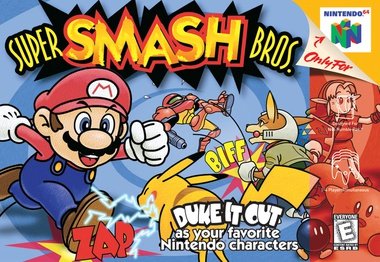
Super Smash Bros.
Nintendo 64FighterMainlineSuper Smash Bros. (April 26, 1999 US) invents Nintendo’s party crossover fighter on N64—items, stages, and a compact roster that turned platforming icons into a chaotic multiplayer staple overnight.
- Overview
- Replaced traditional fighting-game life bars with percentage knockback, item chaos, and Nintendo character crossovers—creating a social living-room fighter that felt closer to party platforming than arcade pure fighting.
- In-game setting
- Opens the N64 Smash era. Soft roster continuity into later games: characters return and expand, but each sequel rebuilds modes and balance for new hardware rather than continuing one locked story save.
- Should you play it?
- Essential for series history and N64 nostalgia. Optional if you only want Ultimate—you do not need 64 lore to enjoy the Switch roster or online modes.
- Release date
- US April 26, 1999 on Nintendo 64. Collectors use cartridges or later reissues where offered; online play is not a modern expectation for this entry.
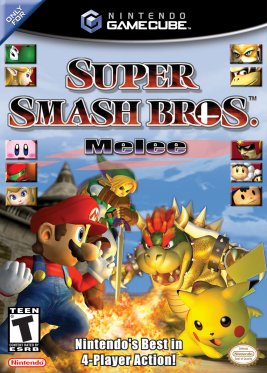
Super Smash Bros. Melee
GameCubeFighterMainlineSuper Smash Bros. Melee (December 3, 2001 US) expands the GameCube-era roster, stages, and competitive depth—still the backbone of a lasting tournament scene beside modern Ultimate play.
- Overview
- Faster movement tech, deeper competitive mechanics, and a larger cast turned Smash from a pure party novelty into a serious tournament ecosystem while keeping item-fueled living-room chaos intact.
- In-game setting
- Second mainline platform era on GameCube. Soft continuity of the crossover fantasy; Brawl and later games do not require finishing Melee’s single-player modes first.
- Should you play it?
- Play for competitive history, LAN nostalgia, or completionism. Safe skip for Ultimate-only newcomers—Melee is a parallel scene, not homework for Switch Smash.
- Release date
- US December 3, 2001 on Nintendo GameCube. Competitive communities still maintain Melee setups; casual players may prefer later hardware for convenience.
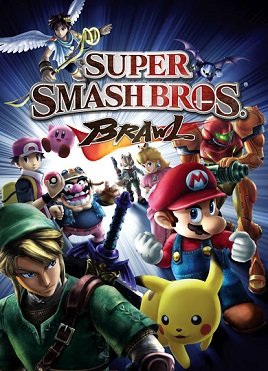
Super Smash Bros. Brawl
WiiFighterMainlineSuper Smash Bros. Brawl (March 9, 2008 US) brings Smash to Wii with online play, a huge stage list, and The Subspace Emissary—the series’ biggest story campaign for many fans (FAQ).
- Overview
- Wii-era online features, Final Smashes, and a cinematic side-scrolling adventure mode widened Smash beyond pure versus matches while keeping the item-and-stage party identity alive for living rooms.
- In-game setting
- Third mainline platform era. Soft roster continuity continues; Subspace is optional adventure lore that does not gate Smash 4 or Ultimate as required reading.
- Should you play it?
- Worth it for Subspace Emissary and Wii nostalgia. Optional before Ultimate—skip freely if you only want the modern Switch roster and online scene.
- Release date
- US March 9, 2008 on Nintendo Wii. Online services are historical; disc play and Subspace campaign remain the practical reasons to revisit it.
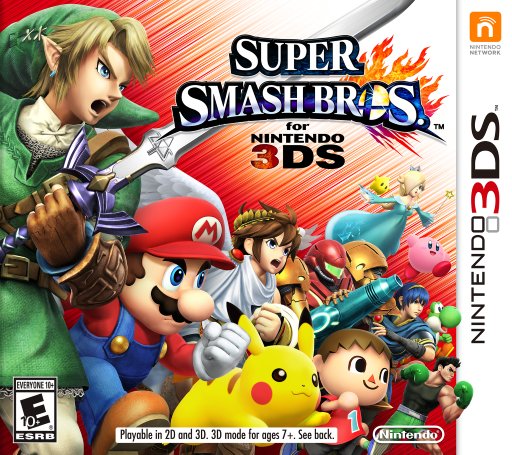
Super Smash Bros. for Nintendo 3DS
Nintendo 3DSFighterMainlineSmash 4Super Smash Bros. for Nintendo 3DS (October 3, 2014 US) is the portable half of Smash 4—streetpass-friendly versus play and a handheld-first take on the shared Smash 4 roster generation before the Wii U home console release.
- Overview
- Brought a full modern Smash ruleset to 3DS hardware with portable multiplayer and a customizable fighter fantasy that proved the series could live outside the living-room TV as a daily carry fighter.
- In-game setting
- First Smash 4 platform release. Shares generation DNA with the Wii U version; collectors list both separately. Soft continuity into Ultimate, which later unifies and expands the roster further.
- Should you play it?
- Collector and handheld nostalgia row. Play either Smash 4 version—or both—before Ultimate only if you want that mid-2010s generation; not required for Switch Smash.
- Release date
- US October 3, 2014 on Nintendo 3DS family systems. Online is legacy; local/portable play and collection completeness are the main 2026 reasons to boot it.
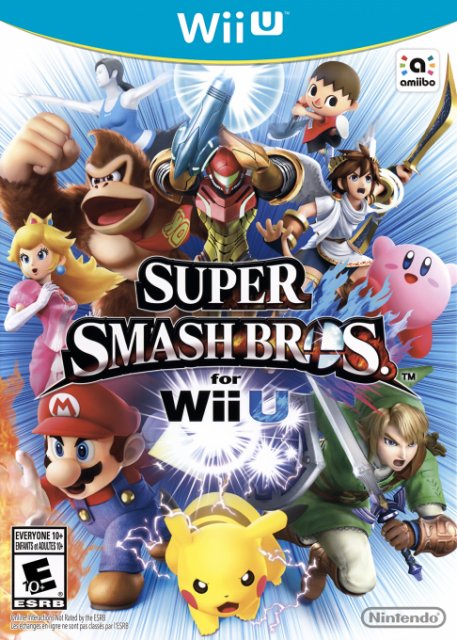
Super Smash Bros. for Wii U
Wii UFighterMainlineSmash 4Super Smash Bros. for Wii U (November 21, 2014 US) is the home-console half of Smash 4—bigger stages, GamePad-era living-room play, and the HD Smash 4 experience that bridged Brawl to Ultimate.
- Overview
- Delivered Smash 4’s HD stage spectacle and eight-player chaos on Wii U while sharing the generation’s roster philosophy with the earlier 3DS release—two platforms, one mid-2010s Smash era.
- In-game setting
- Second Smash 4 platform release for collectors. Soft continuity with 3DS Smash 4 and forward into Ultimate; neither Smash 4 title is required reading before the Switch “everyone is here” roster.
- Should you play it?
- Best Smash 4 living-room stop. Optional before Ultimate—safe skip for Switch-only players who just want the largest modern roster and current online tools.
- Release date
- US November 21, 2014 on Nintendo Wii U. Prefer this version if you want big-screen Smash 4 stages; keep 3DS listed separately on Release for handheld completeness.
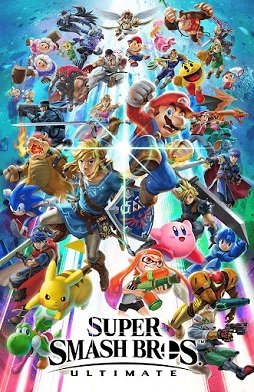
Super Smash Bros. Ultimate
Nintendo SwitchFighterMainlineSuper Smash Bros. Ultimate (December 7, 2018 US) is the Switch-era endpoint—“everyone is here,” massive stage and music libraries, and World of Light as the optional adventure campaign many players tackle after versus (FAQ).
- Overview
- Unified returning fighters into one enormous Switch roster with deep customization, spirits content, and modern online tools—making Ultimate the default Smash destination for casual and competitive players alike.
- In-game setting
- Current mainline endpoint on this page. Soft continuity of the crossover fantasy across decades; you do not need to clear older adventure modes first. World of Light is optional campaign content on top of versus play.
- Should you play it?
- Start here in 2026 unless you specifically want Melee competition or older hardware nostalgia. Add classic-path titles only when collecting every US mainline generation.
- Release date
- US December 7, 2018 on Nintendo Switch (including OLED/Lite). Prefer this version for active online, local tournaments, and the fullest official roster in 2026.
FAQ
Where to start in 2026, Smash 4 dual releases, Subspace Emissary, World of Light, Melee vs Ultimate, and roster continuity.
Release order
Modes & continuity
Platforms & versions
Optional & related
More timelines
Other release-order and story-order guides on this site.
- Game series
Super Mario
Super Mario platformer release order (1985–2023)—2D classics, 3D adventures, New Super…
- Game series
The Legend of Zelda
Zelda release and story order (1987–2024), official timeline branches after Ocarina,…
- Game series
Pokémon
Pokémon mainline RPGs in US release order (1998–2025) and regional story…
- Game series
Fire Emblem
Fire Emblem release and story order (2003–2023)—Awakening, Three Houses, Tellius saga,…
- Game series
Kirby
Kirby release and story order (1992–2022)—Dream Land through Forgotten Land, Epic Yarn…
- Game series
Animal Crossing
Animal Crossing games in order (2002–2020)—GameCube through New Horizons, remakes,…