
PlayStation US launch dates · 1995–2020
PlayStation consoles in order
Seven major PlayStation consoles in US release order—from the original PlayStation (1995) through PS5 (2020), including PSP and PS Vita handhelds. Home and portable systems on one timeline; Slim, Pro, and PS one redesigns are in the questions below, not separate entries. FAQ covers Sony's January 2028 shift to digital-only releases for new PlayStation games.
Release order
PlayStation (1995) → PS2 (2000) → PSP (2005) → PS3 (2006) → PS Vita (2012) → PS4 (2013) → PS5 (2020). Release order lists when each PlayStation consoles chapter shipped so you can buy current editions and see remasters as separate rows when they matter.
- This is the full PlayStation consoles timeline in US release order—home and portable systems on one list
- We don't list prices, bundles, or where to buy—check Sony or your preferred retailer
- New PlayStation game discs end January 2028—existing discs and PS5 disc drives still work—FAQ
- For Nintendo, Microsoft, and Sega in the same era, see the industry-wide game console timeline
At a glance
PlayStation (1995) → PS2 (2000) → PSP (2005) → PS3 (2006) → PS Vita (2012) → PS4 (2013) → PS5 (2020). Release order lists when each *PlayStation consoles* chapter shipped so you can buy current editions and see remasters as separate rows when they matter.
Tap a year to jump straight to that console.
PlayStation consoles in order
US launch dates for every major PlayStation home and portable system on this timeline.
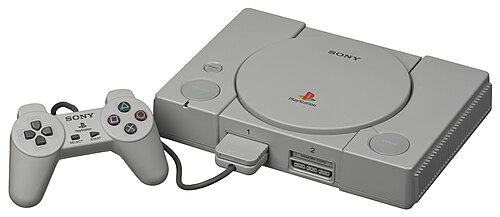 S
SPS1
HomeSony PlayStation (1995)—cD-ROM discs held far more data than cartridges and cost less to manufacture. The DualShock controller (1997) added dual analog sticks and became the template for modern gamepads.
- What's new
- CD-ROM discs held far more data than cartridges and cost less to manufacture. The DualShock controller (1997) added dual analog sticks and became the template for modern gamepads.
- Hardware
- 32-bit R3000 CPU, 2 MB RAM. Original gray model; PS one slim redesign in 2000. US launch September 9, 1995.
- Standout games
- cD-ROM discs held far more data than cartridges and cost less to manufacture. Final Fantasy VII, Metal Gear Solid, Gran Turismo, Resident Evil, Tomb Raider, Crash Bandicoot, Tekken 3.
- Context
- Launched after Sega Saturn but a full year before Nintendo 64, and eventually outsold both. Cartridge loyalty at Nintendo pushed major RPG studios toward PlayStation.
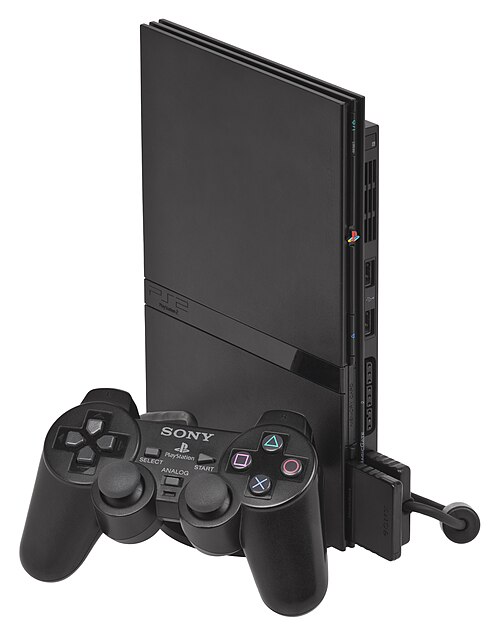 S
SPS2
HomePlayStation 2 (2000)—dVD playback made it an easy sell to parents. Backward compatible with PS1 discs and controllers at launch. DVD-sized storage enabled huge worlds and cinematic cutscenes at scale.
- What's new
- DVD playback made it an easy sell to parents. Backward compatible with PS1 discs and controllers at launch. DVD-sized storage enabled huge worlds and cinematic cutscenes at scale.
- Hardware
- Emotion Engine CPU plus Graphics Synthesizer, 32 MB RAM. Slimline PSTwo revision (2004) reduced size. US launch October 26, 2000.
- Standout games
- Grand Theft Auto: San Andreas, Shadow of the Colossus, God of War, Kingdom Hearts, Metal Gear Solid 3, Final Fantasy X, Guitar Hero.
- Context
- Outlasted GameCube and Xbox by years; production continued until 2013. Weak online versus Xbox Live but unbeatable software breadth and install base.
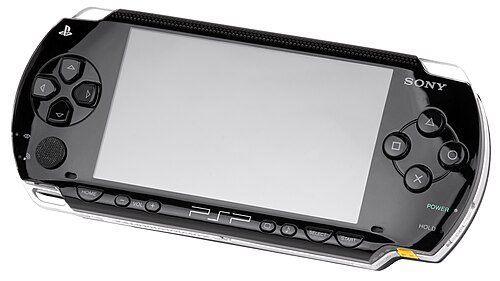 S
SPSP
HandheldPlayStation Portable (2005)—universal Media Disc (UMD) carried games and movies on one format. Wi-Fi multiplayer and Remote Play let PSP connect to PS3 later in the generation. Analog nub and shoulder buttons matched home PlayStation feel.
- What's new
- Universal Media Disc (UMD) carried games and movies on one format. Wi-Fi multiplayer and Remote Play let PSP connect to PS3 later in the generation. Analog nub and shoulder buttons matched home PlayStation feel.
- Hardware
- MIPS R4000-based CPU, 32 MB RAM, 4.3-inch LCD. Models: PSP-1000 (2005), slimmer PSP-2000/3000, PSP Go download-only (2009). US launch March 24, 2005.
- Standout games
- God of War: Chains of Olympus, Monster Hunter Freedom Unite, Lumines, Patapon, Crisis Core: Final Fantasy VII, Grand Theft Auto: Liberty City Stories.
- Context
- Sold roughly 80 million units—strong versus Nintendo DS overall but defined portable AAA for Sony fans. UMD format faded as digital downloads grew on later models.
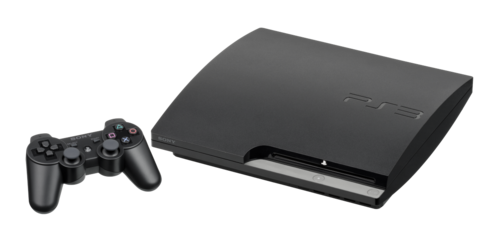 S
SPS3
HomePlayStation 3 (2006)—cell processor was hard to program but powerful when mastered. PlayStation Network added free online (later PS Plus). DualShock 3 added motion sensors after the Sixaxis launch controller.
- What's new
- Cell processor was hard to program but powerful when mastered. PlayStation Network added free online (later PS Plus). DualShock 3 added motion sensors after the Sixaxis launch controller.
- Hardware
- Cell Broadband Engine plus RSX GPU, 256 MB RAM. Early models backward-compatible with PS2; later models removed the chip. Blu-ray up to 50 GB dual-layer. US launch November 17, 2006.
- Standout games
- cell processor was hard to program but powerful when mastered. PlayStation Network added free online (later PS Plus). The Last of Us, Uncharted 2, God of War III, Demon's Souls, Metal Gear Solid 4, Gran Turismo 5, Journey.
- Context
- Launched at $499–$599—steep for 2006. Xbox 360 head start hurt early adoption. Exclusives and Blu-ray value helped PS3 recover; sold more units worldwide than Xbox 360 by generation's end.
 S
SVita
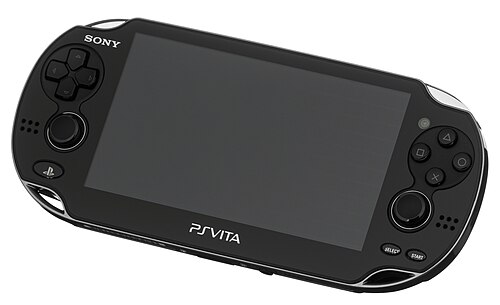
HandheldPlayStation Vita (2012)—dual analog sticks finally matched home controls on a handheld. Front and rear touch surfaces enabled new mechanics (Gravity Rush, Tearaway). Cross-buy and Cross-save linked some PS4 and Vita titles.
- What's new
- Dual analog sticks finally matched home controls on a handheld. Front and rear touch surfaces enabled new mechanics (Gravity Rush, Tearaway). Cross-buy and Cross-save linked some PS4 and Vita titles.
- Hardware
- Quad-core ARM Cortex-A9, 512 MB RAM, 5-inch OLED (1000 series) or LCD (2000 slim). Wi-Fi and 3G models. US launch February 22, 2012.
- Standout games
- Persona 4 Golden, Killzone: Mercenary, Gravity Rush, Uncharted: Golden Abyss, Tearaway, Soul Sacrifice, Spelunky.
- Context
- Critically praised but sold far below PSP and Nintendo 3DS. Sony ended first-party support around 2015; the handheld line ended with Vita while home consoles continued on PS4 and PS5.
 S
SPS4
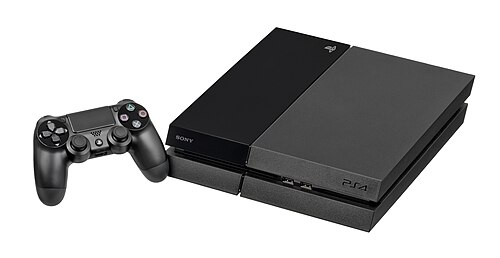
HomeSony leaned into social sharing, indie games, and player-focused messaging after PS3's rough start.
- What's new
- Share button for screenshots and clips. PS4 Pro (2016) added 4K upscaling and HDR for a mid-gen upgrade path. Strong courting of indie developers at launch compared to Xbox One's TV pivot.
- Hardware
- AMD Jaguar x86-8 cores, Radeon GPU, 8 GB GDDR5. Models: original, slim, Pro. DualShock 4 touchpad and light bar. US launch November 15, 2013.
- Standout games
- God of War (2018), Horizon Zero Dawn, Bloodborne, Spider-Man, The Last of Us Part II, Ghost of Tsushima, Persona 5 Royal.
- Context
- Won the generation decisively over Xbox One worldwide. Nintendo Switch later sold more lifetime units but PS4 dominated HD home consoles of the 2010s.
 S
SPS5
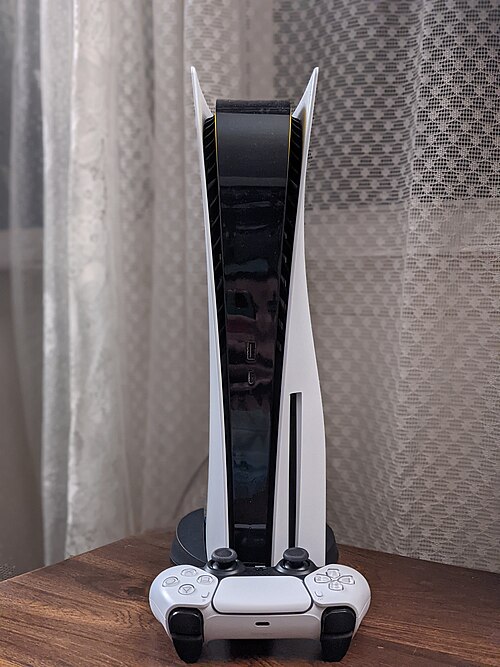
HomePlayStation 5 (2020)—ultra-fast SSD with hardware compression—games like Ratchet & Clank: Rift Apart showcase instant world swaps. DualSense haptics and adaptive triggers add resistance per action.
- What's new
- Ultra-fast SSD with hardware compression—games like Ratchet & Clank: Rift Apart showcase instant world swaps. DualSense haptics and adaptive triggers add resistance per action.
- Hardware
- AMD Zen 2 8 cores, RDNA 2 GPU, 16 GB GDDR6, 825 GB SSD. Disc and Digital Edition models; PS5 Slim revision (2023) shrunk the chassis. US launch November 12, 2020.
- Standout games
- Marvel's Spider-Man 2, Demon's Souls (remake), Returnal, Final Fantasy XVI, God of War Ragnarök, Horizon Forbidden West, Astro's Playroom.
- Context
- Competes with Xbox Series X on specs but Sony maintained strong exclusive narrative early in the generation. Supply shortages in 2020–2022 slowed early adoption.
FAQ
How many systems exist, which came first, handheld vs home order, model variants, physical discs ending in 2028, and how this page compares to the full industry timeline.
Basics
This timeline lists seven major PlayStation consoles in US release order—one entry per generation, from the original PlayStation through PS5, including PSP and PS Vita handhelds. If you count every variant—PS one slim, PS2 Slimline, PSP Go, PS3 Super Slim, PS Vita 2000, PS4 Slim and Pro, PS5 Slim— the total is higher. Variants play the same game library as their parent system and are covered in the questions below, not as separate titles on this timeline.
In the United States, the Sony PlayStation on September 9, 1995 is the first PlayStation home console on this timeline. In Japan it launched as the PlayStation (often called PSX locally) on December 3, 1994. The PSP (2005) was Sony's first PlayStation handheld; the PS Vita (2012) replaced it. The full list in order is on this page.
US release order on this page: PlayStation (1995) → PlayStation 2 (2000) → PlayStation Portable (2005) → PlayStation 3 (2006) → PlayStation Vita (2012) → PlayStation 4 (2013) → PlayStation 5 (2020). That is the complete PlayStation consoles timeline for major home and portable hardware.
Handhelds
This page mixes home and handheld launches by year: PSP arrived between PS2 and PS3; PS Vita between PS3 and PS4. Handheld-only order: PSP → PS Vita. Home-only: PlayStation → PS2 → PS3 → PS4 → PS5. Sony has not released a new PlayStation handheld since Vita; remote play and Portal accessories are separate from console generations.
History
Sony announced that physical disc production for new games on PlayStation consoles ends starting January 2028. After that date, new releases are digital only—PlayStation Store and retailers selling download codes or digital editions. Games already on disc, or new games shipping on disc before January 2028, are not affected. Your PS5 disc drive (or PS4/PS3/PS2/PS1 hardware) still plays existing physical libraries—this is a distribution change, not a new console on the timeline above.
Related pages
More timelines
Other release-order and story-order guides on this site.
- Consoles
Game consoles
History and US release dates for major home and hybrid video game consoles, from…
- Game series
God of War
God of War release and story order (2005–2022), Greek prequels vs Norse saga, and…
- Consoles
Nintendo consoles
All Nintendo consoles in US release order (1985–2025)—NES through Switch 2, Game Boy,…
- Consoles
Sega consoles
All Sega consoles in US release order (1986–1999)—Master System through Dreamcast,…
- Consoles
Xbox consoles
All Xbox consoles in US release order (2001–2020)—original Xbox through Series X | S,…
- Consoles
Handheld consoles
Major handheld game consoles in US release order (1989–2023)—Game Boy through Switch…