
Sega US launch dates · 1986–1999
Sega consoles in US release order
Five major Sega consoles in US release order—from the Master System (1986) through Dreamcast (1999), including Game Gear handheld. Sega exited hardware after Dreamcast; Sega CD, 32X, and Mega Drive add-ons are in the questions below, not separate entries.
Release order
Master System (1986) → Genesis (1989) → Game Gear (1990) → Saturn (1995) → Dreamcast (1999). Release order lists when each Sega consoles chapter shipped so you can buy current editions and see remasters as separate rows when they matter.
- This is the full Sega consoles timeline in US release order—home and handheld systems on one list
- We don't list prices, bundles, or where to buy—check collectors or retro retailers
- For Nintendo, Sony, and Microsoft in the same era, see the industry-wide game console timeline
At a glance
Master System (1986) → Genesis (1989) → Game Gear (1990) → Saturn (1995) → Dreamcast (1999). Release order lists when each *Sega consoles* chapter shipped so you can buy current editions and see remasters as separate rows when they matter.
Tap a year to jump straight to that console.
Sega consoles in order
US launch dates for every major Sega home and handheld system on this timeline.
 SE
SEMaster System
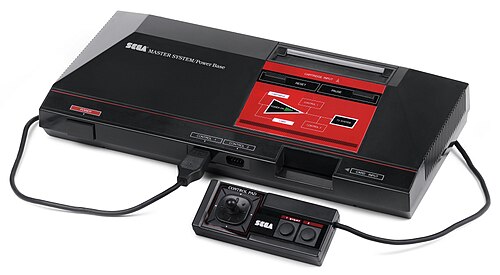
HomeSega's first console in North America—stronger graphics than NES but lost the US shelf war.
- What's new
- Upgrade path from the Japan-only SG-1000. Better color and scrolling than the NES on paper; Sega marketed arcade ports like Hang-On and Space Harrier.
- Hardware
- 8-bit Z80 CPU at 3.58 MHz, Yamaha SN76489 sound. Card and cartridge media depending on region. US launch September 1986.
- Standout games
- Phantasy Star, Alex Kidd in Miracle World, Wonder Boy, Sonic the Hedgehog (late SMS library), Shinobi, Fantasy Zone.
- Context
- Dominated in Brazil and parts of Europe but trailed Nintendo badly in the US. Many Americans first met Sega through Genesis marketing, not Master System.
 N
NGenesis
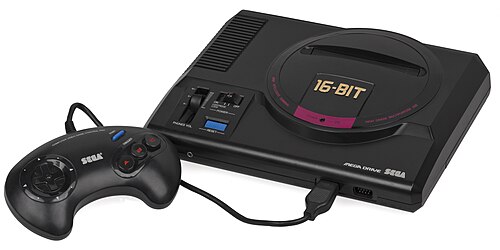
HomeSega Genesis (1989)—early US 16-bit machine with arcade-accurate ports. Marketing targeted sports and mature titles. Sega CD and 32X add-ons extended the platform with mixed results.
- What's new
- Early US 16-bit machine with arcade-accurate ports. Marketing targeted sports and mature titles. Sega CD and 32X add-ons extended the platform with mixed results.
- Hardware
- Motorola 68000 at 7.6 MHz plus Z80 co-processor, Yamaha FM sound. Model 1 (1989); Model 2 slim revision (1993). US launch August 14, 1989.
- Standout games
- early US 16-bit machine with arcade-accurate ports. Marketing targeted sports and mature titles. Sonic the Hedgehog, Streets of Rage II, Phantasy Star IV, Gunstar Heroes, NHL '94, Mortal Kombat, NBA Jam.
- Context
- Fought the SNES for US market share through price cuts and sports licensing. Strong in North America but weaker in Japan where the Super Famicom led.
 SE
SEGame Gear
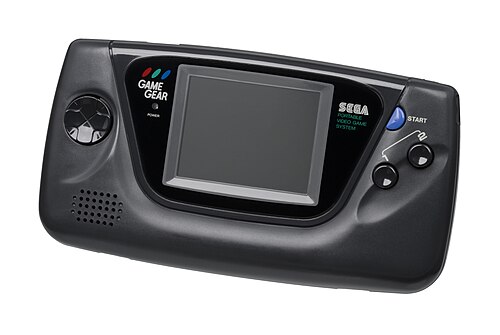
HandheldSega Game Gear (1990)—color LCD and landscape layout differentiated it from the green-screen Game Boy. Master System adapter played many 8-bit cartridges on the go.
- What's new
- Color LCD and landscape layout differentiated it from the green-screen Game Boy. Master System adapter played many 8-bit cartridges on the go.
- Hardware
- Z80-based hardware similar to Master System, 3.2-inch backlit color LCD, six AA batteries. US launch October 1990.
- Standout games
- color LCD and landscape layout differentiated it from the green-screen Game Boy. Master System adapter played many 8-bit cartridges on the go. Sonic the Hedgehog, Shinobi, Columns, Mortal Kombat, Streets of Rage, Defenders of Oasis.
- Context
- Sold roughly 10 million units—far below Game Boy but proved demand for color portables before Game Boy Color. Battery life and size hurt mainstream appeal.
 SE
SESaturn
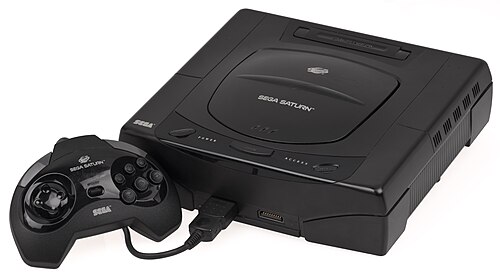
HomeSurprise US launch beat PlayStation—but complex hardware and limited third-party support hurt.
- What's new
- Dual Hitachi SH-2 CPUs and quad graphics processors aimed at 2D perfection and arcade ports. Early surprise US launch (May 1995) caught retailers off guard versus Sony's September date.
- Hardware
- Dual SH-2 CPUs, 2 MB RAM, CD-ROM media. Black US shell with oval-button Model 1; later round-button revision. US launch May 11, 1995.
- Standout games
- Panzer Dragoon Saga, NiGHTS into Dreams, Sega Rally Championship, Virtua Fighter 2, Guardian Heroes, Radiant Silvergun (Japan).
- Context
- Strong in Japan early on but PlayStation's lower price and simpler 3D pipeline won worldwide. Sega shifted focus to Dreamcast after Saturn faded in the US by 1998.
 SE
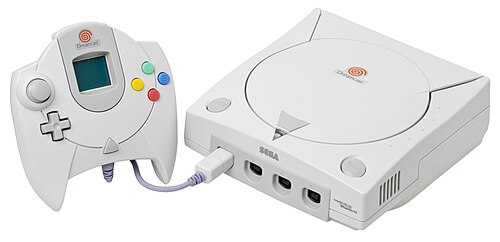
SEDreamcast
HomeSega Dreamcast (1999)—built-in modem for online play (Phantasy Star Online, ChuChu Rocket!). VMU memory cards with tiny screens. Arcade-perfect Naomi hardware roots. Windows CE dev tools lowered PC port barriers.
- What's new
- Built-in modem for online play (Phantasy Star Online, ChuChu Rocket!). VMU memory cards with tiny screens. Arcade-perfect Naomi hardware roots. Windows CE dev tools lowered PC port barriers.
- Hardware
- Hitachi SH-4 at 200 MHz, PowerVR2 graphics, 16 MB RAM, GD-ROM discs (1 GB). VGA box supported 480p on some games. US launch September 9, 1999.
- Standout games
- built-in modem for online play (Phantasy Star Online, ChuChu Rocket!). VMU memory cards with tiny screens. Sonic Adventure, Shenmue, Jet Set Radio, Crazy Taxi, Soulcalibur, Skies of Arcadia, NFL 2K1.
- Context
- Beaten to market by hype for PS2; Sega exited hardware in 2001 and became a third-party publisher. Still cited for creative risks and online features years ahead of Xbox Live's mainstream push.
FAQ
How many systems exist, which came first, handheld vs home order, add-ons and variants, and how this page compares to the full industry timeline.
Basics
This timeline lists five major Sega consoles in US release order—Master System, Genesis, Game Gear, Saturn, and Dreamcast. Sega no longer makes consoles; Dreamcast was the last. If you count add-ons and redesigns—Sega CD, 32X, Genesis Model 2, Saturn Model 2—the total is higher. Add-ons and shell revisions share libraries with their base system and are covered below, not as separate titles on this timeline.
In the United States, the Sega Master System in September 1986 is the first Sega console on this timeline. In Japan, the SG-1000 (1983) and Mark III (1985) predated it—the Master System is an upgraded Mark III sold worldwide. The Game Gear (1990) was Sega's first handheld in the US. The full list in order is on this page.
US release order on this page: Master System (1986) → Genesis (1989) → Game Gear (1990) → Saturn (1995) → Dreamcast (1999). That is the complete Sega consoles timeline for major home and handheld hardware Sega sold in the US.
Handhelds & add-ons
This page mixes home and handheld launches by year: Game Gear arrived between Genesis and Saturn. Handheld-only: Game Gear. Home-only: Master System → Genesis → Saturn → Dreamcast. Sega never released a handheld after Game Gear; Nomad (1995) was a portable Genesis, not a new platform generation.
History
Related pages
More timelines
Other release-order and story-order guides on this site.
- Consoles
Game consoles
History and US release dates for major home and hybrid video game consoles, from…
- Consoles
Nintendo consoles
All Nintendo consoles in US release order (1985–2025)—NES through Switch 2, Game Boy,…
- Consoles
PlayStation consoles
All PlayStation consoles in US release order (1995–2020)—PS1 through PS5, PSP and PS…
- Game series
Sonic the Hedgehog
Sonic release and story order (1991–2025)—Classic Genesis through Frontiers, official…
- Consoles
Handheld consoles
Major handheld game consoles in US release order (1989–2023)—Game Boy through Switch…