
Release & story order
Soulcalibur timeline
Namco’s weapon-based Soulcalibur from US Soul Blade (January 15, 1997; arcade Soul Edge 1995–96) through Soulcalibur VI (October 19, 2018)—US-oriented mainline milestones, a sword-saga Story path that tracks the numbered shelf (Blade → I → II → III → IV → V → VI), and FAQ for Broken Destiny, Legends, Lost Swords, guest fighters, and VI’s reboot. Neighbor fighter shelves: Tekken, Street Fighter, Guilty Gear, Mortal Kombat, and Bayonetta.
Pick your path:
Release order
When Namco shipped each mainline Soulcalibur milestone—US Soul Blade (1997) through Soulcalibur VI (2018). Release follows Blade → Soulcalibur → II → III → IV → V → VI. Broken Destiny, Legends, Lost Swords, guest-heavy revisions, and films are optional.
- Modern newcomers → Soulcalibur VI (2018)—current mainline and the usual 2026 buy
- Classic shelf → Soulcalibur (Dreamcast) or Soulcalibur II if you want the acclaimed 3D-weapon peak
- Release history → 1997 Blade → 1998 I → 2002 II → 2005 III → 2008 IV → 2012 V → 2018 VI
- Skip Broken Destiny, Legends, Lost Swords, and films for mainline game canon—optional
Story order tips
Practical sword-saga reading for newcomers: Soul Blade → Soulcalibur → II → III → IV → V → VI. Mainline story order matches Release on this page—VI is a reboot that restarts after Soul Blade, not a required sequel to V. Spin-offs and movies remain optional.
- Classic path: Soul Blade → I → II → III → IV → V (same order as Release)
- Soulcalibur VI reboots after Soul Blade—it does not require V
- Broken Destiny and Legends are side packages—not story-order steps
- On Story order, later entries may be hidden—reveal when ready or use Show all spoilers
Story order
Practical sword-saga reading for newcomers: Soul Blade → Soulcalibur → II → III → IV → V → VI. Mainline story order matches Release on this page—VI is a reboot that restarts after Soul Blade, not a required sequel to V. Spin-offs and movies remain optional.
- Classic path: Soul Blade → I → II → III → IV → V (same order as Release)
- Soulcalibur VI reboots after Soul Blade—it does not require V
- Broken Destiny and Legends are side packages—not story-order steps
- On Story order, later entries may be hidden—reveal when ready or use Show all spoilers
Timeline
When each game was released. Click a game for platforms, dates, and where it fits in your playthrough.
Release order
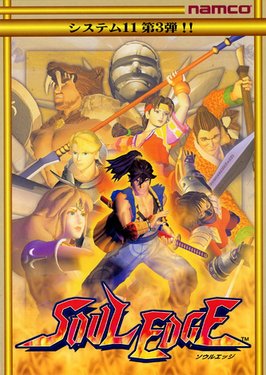
Soul Blade
PlayStationArcadeFightingMainlineArcadeSoul Blade (US PlayStation January 15, 1997) is Namco’s first weapon fighter in the West—the PlayStation name for arcade Soul Edge (1995–96). Mitsurugi, Sophitia, Cervantes, and the hunt for the cursed sword start here. Origin history—not today’s online baseline.
- Overview
- Locks the Soul Edge MacGuffin, weapon-vs-weapon 3D, and the Cervantes/Sophitia/Mitsurugi core that every later Soulcalibur still answers. Edge Master mode on PlayStation is extra campaign, not a second title.
- In-game setting
- Release and Story opener. Arcade Soul Edge and US Soul Blade are the same first game under two names. Lost Swords and mobile spin-offs stay optional.
- Should you play it?
- Optional if you start at Soulcalibur VI. Required for the full Release history shelf from the cursed-sword hunt forward.
- Release date
- US PlayStation January 15, 1997 (this page’s US hook). Japanese arcade Soul Edge late 1995 / early 1996; Japanese PlayStation December 20, 1996 still titled Soul Edge. Platforms: Arcade, PlayStation.
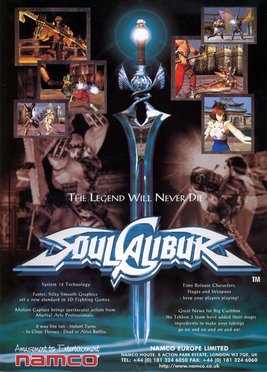
Soulcalibur
ArcadeDreamcastportsFightingMainlineArcadeSoulcalibur (arcade July 30, 1998; US Dreamcast September 9, 1999) is the eight-way-run sequel—Kilik, Xianghua, and Nightmare’s azure armor against Soul Edge, plus the holy sword that names the series. Still one of the highest-rated fighting games; Xbox 360 XBLA (July 2, 2008) is a later port of this same chapter.
- Overview
- Eight-way movement, the Soul Charge / Guard Impact language, and a Dreamcast showcase that made weapon fighters feel like a 3D stage play instead of a 2D plane with props.
- In-game setting
- Release after Soul Blade. On Story, follows the Edge hunt into Nightmare’s first proper war. Ports share this lineage, not extra titles.
- Should you play it?
- Essential classic. Play for history and feel. Modern newcomers can note it and jump toward VI if they only want a current storefront.
- Release date
- Japanese arcade July 30, 1998 (year on this row); US Dreamcast September 9, 1999 as a launch-era home hit. Xbox 360 July 2, 2008; later mobile ports exist. Platforms: Arcade, Dreamcast, ports.
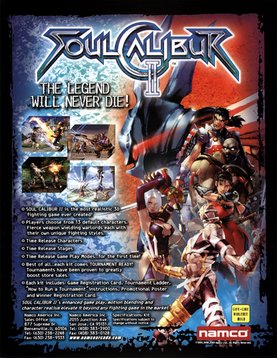
Soulcalibur II
ArcadePlayStation 2GameCubeXboxFightingMainlineArcadeSoulcalibur II (arcade July 10, 2002; US home August 26, 2003) is the guest-fighter peak—Link on GameCube, Heihachi on PlayStation 2, Spawn on Xbox—plus Cassandra, Raphael, and Nightmare’s return. Soulcalibur II HD Online (November 19, 2013) is the later HD package of this same war, not a new story.
- Overview
- Platform-exclusive guests turn one arcade board into three living-room arguments, while the core 3D-weapon game still defines how later numbered entries move.
- In-game setting
- Release after Soulcalibur. Story places it after I and before III. HD Online is this milestone in HD—optional if you already have a sixth-gen copy.
- Should you play it?
- Required for full classic history. Optional if you only want VI online. Heihachi fans can also see Tekken.
- Release date
- Japanese arcade July 10, 2002; US GameCube / PlayStation 2 / Xbox August 26, 2003. HD Online US PlayStation 3 November 19, 2013 (Xbox 360 the next day). Platforms listed for this beat.
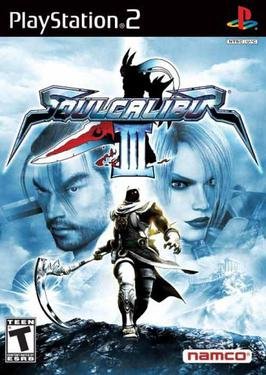
Soulcalibur III
PlayStation 2ArcadeFightingMainlineSoulcalibur III (US PlayStation 2 October 25, 2005; arcade edition 2006) is the Chronicles of the Sword / create-a-fighter chapter—Zasalamel, Tira, and a single-platform mainline after II’s three-console split. A later PlayStation 4 / PlayStation 5 store listing (December 16, 2025) is this same PS2 game, not a remake.
- Overview
- Character creation plus a strategy-RPG side path give Project Soul a hobby-box mainline that IV will slim down. Arcade Edition (2006) is a cabinet revision, not a new numbered game.
- In-game setting
- Soulcalibur III (US PlayStation 2 October 25, 2005; arcade edition 2006) is the Chronicles of the Sword / create-a-fighter chapter—Zasalamel, Tira, and a single-platform mainline after II’s three-console split. Release after II. Story continues Nightmare’s war toward IV.
- Should you play it?
- Play for lore and creation tools. Skip if you are racing toward VI and only need summaries. Follow Start Here if you want the shortest 2026 checklist that still includes this chapter.
- Release date
- US PlayStation 2 October 25, 2005 (Japan November 23, 2005). Arcade Edition April 3, 2006. PlayStation 4 / PlayStation 5 Classics-style rerelease December 16, 2025. Platforms: PS2, Arcade, later PS store.
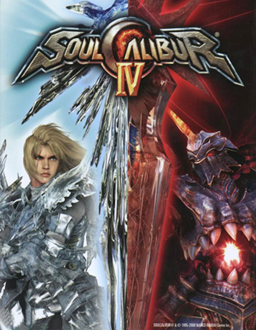
Soulcalibur IV
PlayStation 3Xbox 360FightingMainlineSoulcalibur IV (US July 29, 2008) is the HD Star Wars guest era—Darth Vader, Yoda, and The Apprentice around Siegfried and Nightmare’s climax. Broken Destiny on PSP is a portable companion, not a replacement for this campaign.
- Overview
- Critical Finish spectacle and online HD consoles reboot the weapon fighter for a new generation, with licensed guests as the marketing spear.
- In-game setting
- Release after III. Story continues toward V’s seventeen-year jump. Legends on Wii is an optional spin-off around this era, not a numbered game on this list.
- Should you play it?
- Strong classic-modern bridge. Newcomers in 2026 can prefer VI, then return for history. Follow Start Here if you want the shortest 2026 checklist that still includes this chapter.
- Release date
- US PlayStation 3 / Xbox 360 July 29, 2008. Platforms listed for this beat. No original PC or PlayStation 4 release of IV.
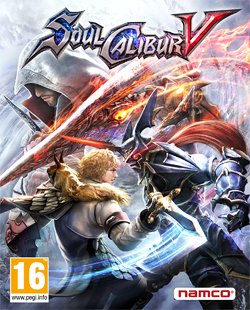
Soulcalibur V
PlayStation 3Xbox 360FightingMainlineSoulcalibur V (US January 31, 2012) jumps about seventeen years after IV—Patroklos and Pyrrha as the new Alexandra generation, Ezio as the guest, and a thinner veteran roster. Last HD-era numbered game before the VI reboot.
- Overview
- Brave Edge meter play and a next-generation cast that treats IV’s ending as settled history. Controversial roster cuts are why many players still recommend II or VI instead.
- In-game setting
- Release after IV. Story is the classic timeline’s last numbered chapter; VI does not continue this generation.
- Should you play it?
- Required only if you want the pre-reboot close. Optional before VI—the reboot does not assume Patroklos homework.
- Release date
- US PlayStation 3 / Xbox 360 January 31, 2012 (Japan / Europe early February). Platforms: PS3, Xbox 360.
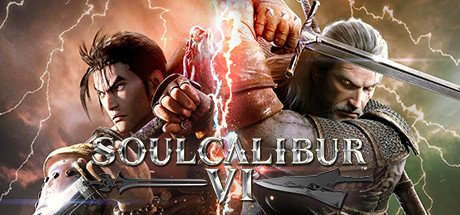
Soulcalibur VI
PlayStation 4Xbox OnePCFightingMainlineSoulcalibur VI (October 19, 2018) is Bandai Namco’s current mainline—Reversal Edge, Soul Chronicle, and a reboot that retells the years after Soul Blade rather than continuing V. Geralt, 2B, and later guests sit inside this one game. Best 2026 storefront on-ramp; older titles remain optional history.
- Overview
- Reversal Edge cinematic clashes and Unreal Engine presentation reconstruct the weapon fighter for current consoles. Libra of Soul is a create-a-fighter RPG path, not a second title.
- In-game setting
- Release closer. Story treats it as a reimagining after Soul Blade, listed last so Release order stays honest. Season-pass guests stay optional inside this game.
- Should you play it?
- Start here in 2026 if you want a living product. Play older mainline titles for arcade history or the classic Siegfried/Nightmare path through V.
- Release date
- Worldwide October 19, 2018 on PlayStation 4, Xbox One, and Steam. Platforms listed for this beat.
FAQ
Release vs story order, where to start in 2026, Soul Blade vs Soul Edge, VI’s reboot, Broken Destiny / Legends, and guests.
Release order
Release follows Namco ship milestones: Soul Blade (US 1997) → Soulcalibur (arcade 1998) → II (2002) → III (2005) → IV (2008) → V (2012) → VI (2018). Story uses that same mainline sequence for the classic path. Soulcalibur VI is a reboot that restarts after Soul Blade—it is listed last because it shipped last, not because you must finish V first.
Start with Soulcalibur VI if you want a current storefront, tutorials, and the living roster. For classic feel, Soulcalibur (Dreamcast) and Soulcalibur II are the usual recommendations. Older mainline titles are history and lore—not required homework before you boot VI.
Story & canon
Classic reading order on this page: Soul Blade → Soulcalibur → II → III → IV → V. Soulcalibur VI reimagines the early saga after Soul Blade and does not continue V. Guest characters (Link, Heihachi, Spawn, Star Wars, Ezio, Geralt, 2B) are licensed extras—fun, not extra story-order titles.
Soulcalibur VI is a reboot / reimagining. Soul Chronicle retells the years after Soul Blade (Kilik, Xianghua, Nightmare) with new scenes. You do not need Soulcalibur V. The classic I–V path still exists for completionists; VI does not wipe those games from this list—it just does not continue Patroklos’s generation.
Editions & spin-offs
Guests, films & related
More timelines
Other release-order and story-order guides on this site.
- Game series
Tekken
Tekken games in release and story order from 1994 to 2024—arcade original through…
- Game series
Street Fighter
Street Fighter games in release and story order (1987–2023)—arcade original through…
- Game series
Guilty Gear
Guilty Gear games in release and story order (1998–2021)—arcade original through…
- Game series
Mortal Kombat
Mortal Kombat release and story order (1992–2023)—Midway classics through Armageddon,…
- Game series
Bayonetta
Bayonetta release and story order (2009–2022)—Bayonetta 1–3, Switch ports, Origins…