
Release & story order
Street Fighter timeline
Capcom’s Street Fighter from the 1987 arcade original through Street Fighter 6 (2023)—US-oriented release milestones, a practical Story path (Alpha prequel era → II → III → IV → V → VI, with SF1 as early history), and FAQ for Super Turbo, EX, Vs. Capcom, World Tour vs Fighting Ground, and the films. Neighbor fighter shelves: Mortal Kombat and Tekken.
Pick your path:
Release order
When Capcom shipped each mainline milestone—arcade Street Fighter (1987) through Street Fighter 6 (2023). Release follows the numbered series and key eras: original → II → Alpha → III: 3rd Strike → IV → V → VI. Super Turbo revisions, EX, Vs. Capcom, and movies are optional.
- Modern newcomers → Street Fighter 6 (2023)—best tutorials, netcode, and current roster
- Classic shelf → SF2 / Super Turbo (FAQ) then Alpha or III if you want arcade history
- Release history → 1987 → 1991 II → 1995 Alpha → 1999 3rd Strike → IV → V → VI
- Skip EX, Vs. Capcom, and movies for mainline game canon—optional
Story order tips
Practical Capcom continuity for newcomers: early Street Fighter (historical) → Street Fighter Alpha (prequel-era Ryu/Ken/Chun-Li threads) → Street Fighter II → Street Fighter III: 3rd Strike → Street Fighter IV → Street Fighter V → Street Fighter 6. Exact lore charts vary by ending; this page uses the widely taught play-and-read order.
- Practical path: SF1 (historical) → Alpha → SF2 → III: 3rd Strike → IV → V → VI
- Alpha is the prequel-era block before II’s World Warrior boom—not a post-VI epilogue
- III sits between II and IV in common Capcom reading; endings still leave room for debate
- On Story order, later entries may be hidden—reveal when ready or use Show all spoilers
Story order
Practical Capcom continuity for newcomers: early Street Fighter (historical) → Street Fighter Alpha (prequel-era Ryu/Ken/Chun-Li threads) → Street Fighter II → Street Fighter III: 3rd Strike → Street Fighter IV → Street Fighter V → Street Fighter 6. Exact lore charts vary by ending; this page uses the widely taught play-and-read order.
- Practical path: SF1 (historical) → Alpha → SF2 → III: 3rd Strike → IV → V → VI
- Alpha is the prequel-era block before II’s World Warrior boom—not a post-VI epilogue
- III sits between II and IV in common Capcom reading; endings still leave room for debate
- On Story order, later entries may be hidden—reveal when ready or use Show all spoilers
Timeline
When each game was released. Click a game for platforms, dates, and where it fits in your playthrough.
Release order
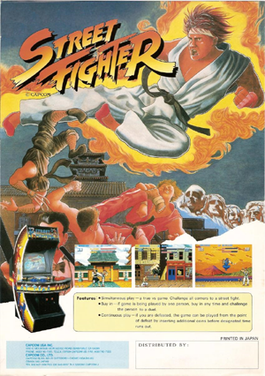
Street Fighter
ArcadeportsFightingMainlineArcadeStreet Fighter (1987) plants Capcom’s one-on-one fighter DNA—Ryu and Ken prototypes, pressure-sensitive punches, and arcade culture—before Street Fighter II remakes the genre. Treat this as the historical spark, not the modern tournament baseline.
- Overview
- Establishes Capcom’s fighting brand and the Ryu/Ken lineage II will explode worldwide. Primitive beside later titles, but the franchise timeline starts here.
- In-game setting
- Release opener; Story keeps it early/historical before the Alpha prequel era. Ports share this lineage, not separate titles.
- Should you play it?
- Optional if you start at SF6. Required for the full Release history shelf from 1987 forward. Follow Start Here if you want the shortest 2026 checklist that still includes this chapter.
- Release date
- US/arcade commonly cited August 30, 1987 (Japan earlier that year); later ports follow. Platforms: Arcade, ports.
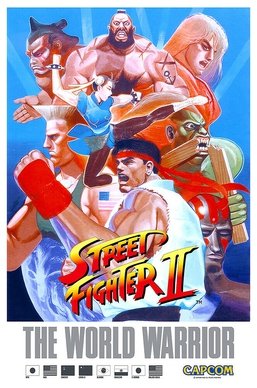
Street Fighter II
ArcadeSNESportsFightingMainlineArcadeStreet Fighter II (1991) invents the World Warrior roster—Chun-Li, Guile, Blanka, and company—plus special-move grammar that defined 1990s arcades. Champion Edition / Super Turbo revisions stay FAQ expansions of the same war.
- Overview
- Selectable fighters, memorable specials, and home ports turn Capcom into a household fighting brand. Later Alpha, III, and modern titles still answer this entry’s systems.
- In-game setting
- Release cornerstone after SF1. On Story, follows the Alpha prequel era. Super Turbo is the definitive revision—optional.
- Should you play it?
- Essential classic. Pair with startHere before optional Super Turbo / collection play. Follow Start Here if you want the shortest 2026 checklist that still includes this chapter.
- Release date
- US arcade February 6, 1991 (widely cited); SNES and other ports follow. Platforms: Arcade, SNES, ports.
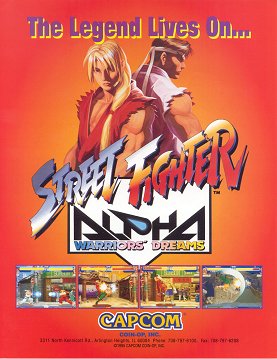
Street Fighter Alpha
ArcadePlayStationSaturnportsFightingMainlineArcadeStreet Fighter Alpha (1995) opens the prequel-era Alpha trilogy—air combos, dramatic finishers, and younger World Warriors bridging SF1 vibes toward II. Alpha 3 is the definitive package most players mean by “play Alpha.”
- Overview
- CPS2 spectacle, Alpha counters, and prequel casting deepen Capcom lore between the original and II boom for mid-1990s fighters.
- In-game setting
- Release after II historically; Story places Alpha before II. Prefer Alpha 3 (and collections) when you boot the era.
- Should you play it?
- Play for lore and mid-90s mechanics. Modern newcomers can skip to SF6 and return later. Follow Start Here if you want the shortest 2026 checklist that still includes this chapter.
- Release date
- US arcade June 27, 1995 (commonly cited); PlayStation/Saturn ports follow. Platforms: Arcade, PlayStation, Saturn, ports.
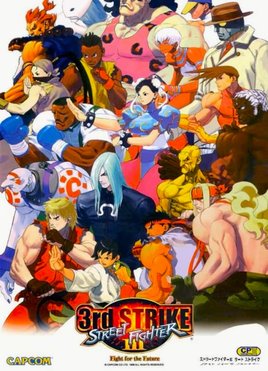
Street Fighter III: 3rd Strike
ArcadeDreamcastportsFightingMainlineArcadeStreet Fighter III: 3rd Strike (1999) is the definitive III package—parries, a new-generation roster, and Alex-era storytelling after II. Earlier New Generation / 2nd Impact boards feed this entry rather than separate slots.
- Overview
- Parry defense and high-skill neutral rewrite competitive Street Fighter. Culture still treats 3rd Strike as a landmark after IV–VI modernize netplay.
- In-game setting
- Release after Alpha. Story places it after II and before IV. III revisions collapse into this 3rd Strike milestone.
- Should you play it?
- Required for full mainline history. Optional if you only want modern IV–VI online play. Follow Start Here if you want the shortest 2026 checklist that still includes this chapter.
- Release date
- US arcade May 12, 1999 (commonly cited); Dreamcast and later Online Edition / collections follow. Platforms: Arcade, Dreamcast, ports.
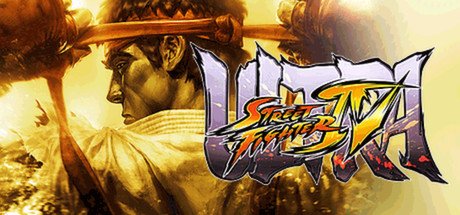
Street Fighter IV
PlayStation 3Xbox 360PCArcadeFightingMainlineStreet Fighter IV (US home February 17, 2009) revives the series for HD consoles—Focus Attacks, returning World Warriors, and a cinematic comeback after the post-III quiet. Ultra / Super revisions expand the same reboot era.
- Overview
- 2.5D presentation, Focus Attacks, and online matchmaking reboot Capcom’s fighter for a new console generation—casual and competitive reconverge.
- In-game setting
- Street Fighter IV (US home February 17, 2009) revives the series for HD consoles—Focus Attacks, returning World Warriors, and a cinematic comeback after the post-III quiet. Release after 3rd Strike. Story continues after III toward V and VI. US home date anchors this.
- Should you play it?
- Strong classic-modern bridge. Newcomers in 2026 can prefer SF6, then return for history. Follow Start Here if you want the shortest 2026 checklist that still includes this chapter.
- Release date
- US PlayStation 3 / Xbox 360 February 17, 2009; PC and later Ultra editions follow. Platforms: PS3, Xbox 360, PC, Arcade.
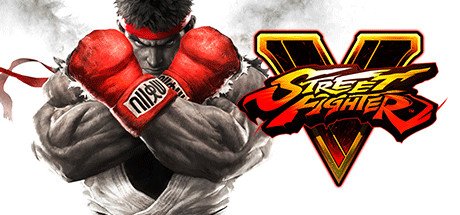
Street Fighter V
PlayStation 4PCFightingMainlineStreet Fighter V (February 16, 2016) pushes V-Trigger systems, a long season-pass roster life, and Arcade / Champion Edition evolution on PS4 and PC. Story Mode chapters expand arcs between IV and 6.
- Overview
- V-Skill / V-Trigger resource play and live-service roster cadence define mid-2010s Capcom fighting. Champion Edition packages complete season content.
- In-game setting
- Street Fighter V (February 16, 2016) pushes V-Trigger systems, a long season-pass roster life, and Arcade / Champion Edition evolution on PS4 and PC. Release after IV. Story sits between IV and SF6. Prefer Champion Edition over launch-day barebones.
- Should you play it?
- Still playable for lore; SF6 is the better 2026 default entry for new online players. Follow Start Here if you want the shortest 2026 checklist that still includes this chapter.
- Release date
- US PlayStation 4 / PC February 16, 2016. Platforms: PS4, PC.
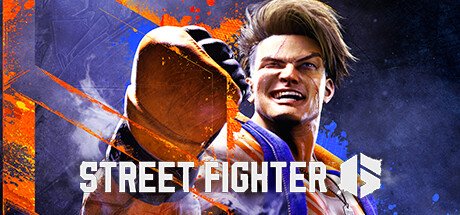
Street Fighter 6
PlayStation 5PlayStation 4Xbox SeriesPCFightingMainlineStreet Fighter 6 (June 2, 2023) is Capcom’s current mainline—Drive system combat, modern controls, and dual pillars of Fighting Ground versus RPG-flavored World Tour. Best 2026 on-ramp; older titles remain optional history.
- Overview
- Drive Impact / Parry resources, Modern controls, and a robust tutorial stack lower the skill floor. World Tour and Fighting Ground split story RPG from versus lab.
- In-game setting
- Release and Story closer. Continues after V in practical Capcom chronology. Mode differences are FAQ-detailed, not separate titles.
- Should you play it?
- Start here in 2026. Play older mainline titles only for arcade history or backstory depth. Follow Start Here if you want the shortest 2026 checklist that still includes this chapter.
- Release date
- Worldwide June 2, 2023 on PS5, PS4, Xbox Series, and PC. Platforms listed for this beat.
FAQ
Release vs story order, where to start in 2026, Super Turbo / EX / Vs., SF6 modes, and movies.
Release order
Release follows Capcom ship milestones: SF1 (1987) → II (1991) → Alpha (1995) → III: 3rd Strike (1999) → IV → V → VI. Story uses a practical Capcom path: SF1 (historical) → Alpha (prequel era) → II → III → IV → V → VI.
Start with Street Fighter 6. It has the best tutorials, modern netcode, and the current competitive scene. Older mainline titles are history and lore—not required homework before you queue ranked.
Story & canon
Practical reading order on this page: Street Fighter (early) → Street Fighter Alpha (prequel era; prefer Alpha 3 to play) → Street Fighter II → Street Fighter III: 3rd Strike → Street Fighter IV → Street Fighter V → Street Fighter 6. Exact ending charts vary; this is the newcomer-friendly Capcom ladder.
World Tour is the avatar RPG / character-driven onboarding mode. Fighting Ground is the classic versus lab (arcade, training, ranked). Same SF6 entry—pick World Tour to learn the world, Fighting Ground to lab the Drive system. Neither needs a second timeline entry.
Revisions & spin-offs
Movies & extras
More timelines
Other release-order and story-order guides on this site.
- Game series
Mortal Kombat
Mortal Kombat release and story order (1992–2023)—Midway classics through Armageddon,…
- Game series
Tekken
Tekken games in release and story order from 1994 to 2024—arcade original through…
- Game series
Guilty Gear
Guilty Gear games in release and story order (1998–2021)—arcade original through…
- Game series
BlazBlue
BlazBlue games in release and story order (2009–2016)—Calamity Trigger through Central…
- Game series
Soulcalibur
Soulcalibur games in release and story order (1997–2018)—Soul Blade through…
- Game series
Bayonetta
Bayonetta release and story order (2009–2022)—Bayonetta 1–3, Switch ports, Origins…
- Game series
Devil May Cry
Devil May Cry release and story order (2001–2019)—DMC 3 through 5, DmC reboot, HD…
- Game series
God of War
God of War release and story order (2005–2022), Greek prequels vs Norse saga, and…
- Media
DC Movies
DC theatrical movies in US release order and practical continuity lanes—Nolan Batman,…